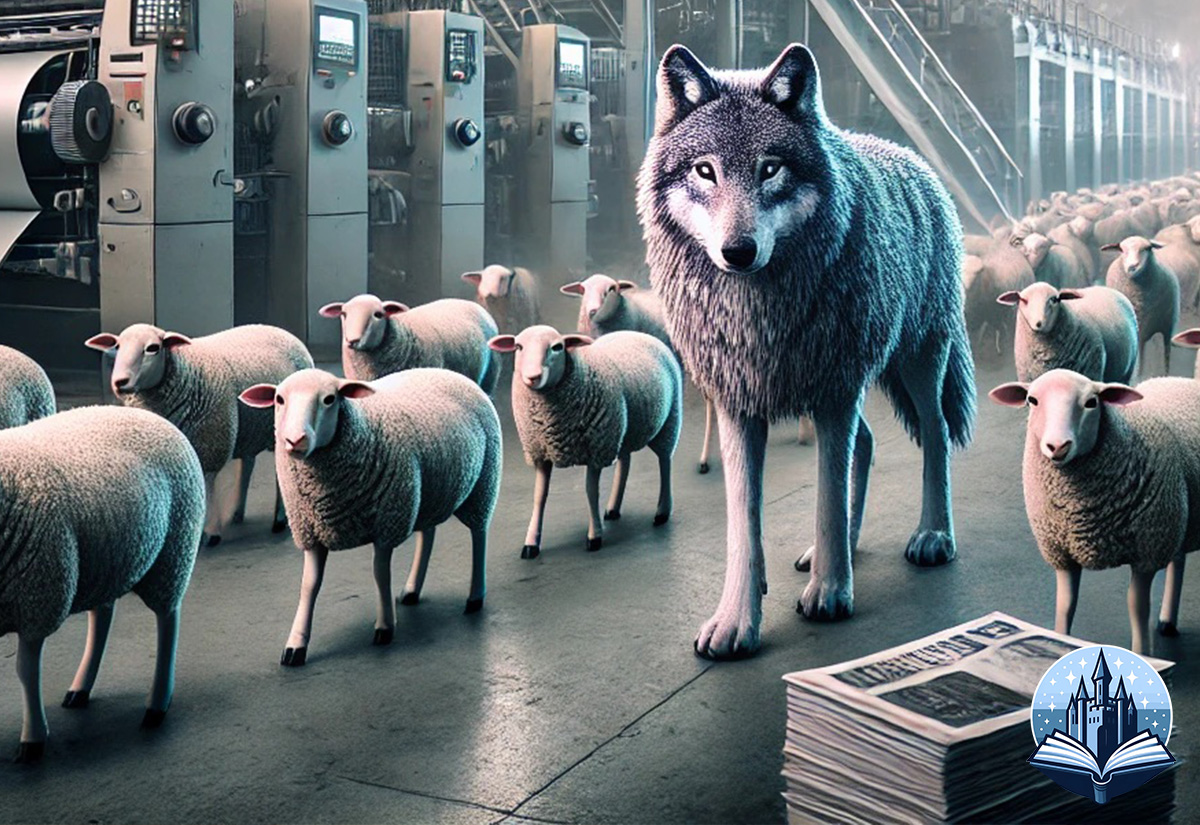
Over two thousand years ago, Jesus warned his disciples, saying, “Watch out for false prophets who come disguised as sheep but inwardly are vicious wolves.” He accused the most highly respected religious leaders of his day of being like whitewashed tombs, looking good on the outside but rotten on the inside. Today, if he was speaking to aspiring writers who wanted to publish a book, he might say, “Watch out for scams and promises of publishing success, because what appears to be so good might be really bad for you.”
Anticipating Danger
We may not know it, but sometimes we can be like sheep—naïve, ignorant, and trusting. You just won a weeklong Caribbean cruise. You’ve inherited a huge sum of money from a distant relative. A Nigerian prince wants to give you $10 million. Most of us would quickly recognize such scams, but those emails would never arrive in our Inbox if they didn’t work on some people some of the time.
Each year, Internet scams alone cost Americans over $12 billion. Why? Because someone was too naïve, ignorant, and trusting to recognize a deal that was too good to be true. Well … a lot of someones. Every loss came because someone didn’t know better. Surprise. Surprise. That someone could be me. Or you? I hope not.
I’ve been caught twice, for only $500, which is the best money I’ve ever lost. The experiences taught me to be more cautious, to look before I leap. Here’s the problem that all writers have: We don’t know what we don’t know. When we’re told something that sounds good, we can be like fish eager to swallow the bait, unaware of the hook.
The Writer’s Unique Vulnerability
In photography, talent, or design service scams, aspiring models, actors, and artists may be duped into paying money for their hope that is never fulfilled. Since most creative professionals must involve themselves in the business for years and understand how their industry works, they seldom fall into those traps. But not so for writers. With no special training and no knowledge of the industry, anybody can write and publish a book. This makes first-time book authors especially vulnerable.
If you can speak, then you can write. All you need is a book idea and a computer to record your keystrokes. Just one page a day adds up to 365 pages in a year—enough for two books. After a hundred or so pages, you know you’ve created a treasure that should be a bestseller. You know that because the message has done so much for you, it surely would help a million other people.
What Great Writing Does
Most people think, If I write a great book, everybody will want to buy a copy. That might be true, but at best, it’s a poorly conceived thought. Why? It helps to understand why people buy books. First, they must know the book exists. Then they must believe the value justifies the expense. After you’ve achieved steps one and two, and only then, the content matters. By some estimates, 80 percent of books purchased are never read cover-to-cover. Might that be true for you? How many books are on the shelf, only started or maybe never read? If that’s true for you, then you can be sure it’s true for most people.
Here’s the way publishing really works. People buy books because of celebrity, not content. The first thing a traditional publisher will ask an agent is: “What’s this author’s platform?” That’s publishing lingo that’s really asking: “Does this author already have a million Internet friends, speak to an audience of thousands, or in some way guarantee sales of at least 25,000 books?” You see, the traditional publishing world is about the money now, not the message. You shouldn’t blame them for taking the easy money, because there are plenty of celebrities out there who can fill their catalogs with books that don’t have to be that good.
Here is one shocking truth: Great writing doesn’t sell books. All publishers are in the business of producing and distributing books, not selling them. Okay, that’s two truths. I hope you get the point: If you’re not already a celebrity or speaker with a large audience that would want your book, then you must find a way to reach your audience and cause them to believe your book will satisfy an already-felt need. Easy, right?
It might be easy to say, but it’s not easy to do, or everybody would be doing it. Here’s another shocking truth: Amazon lists about 30 million books, adds another million every year, and 80 percent of those books won’t sell 100 copies in a year. The advertised bestselling books are anomalies. Your wonderful book will be like a tiny needle in ginormous haystack.
How Much to Invest for Publication
I continue to hear horror stories from disappointed authors who wished they’d known their investment wasn’t going to pay off. One author spent $22 thousand to publish a children’s book. Another author spent $10 thousand and has given away more books than were sold. One unhappy author has a thousand copies gathering dust in his garage, with no means to even give them away. How did this happen? I know of an author who paid $2 thousand with the promise that all but $200 would be returned if the book didn’t make it to print. Then more money was needed. With so much already invested, it made good sense to do whatever was necessary. The book finally was published—after the author had paid $12 thousand and guaranteed the publisher a healthy profit. But for the author? Pretty close to a $12 thousand loss.
More wolves in sheep’s clothing. They are out there, so beware.
What Catches Us Unaware
The lure of the giant payday.
Media coverage of the rare bestseller creates a distorted picture of the odds of your being successful. That opens the door to predators who spin their tales of big money, and all you must do is pay this fee for their valuable services. You’re one of a select few who has the perfect book that everybody will want to read. You’ll be listed on Amazon, in the publisher’s catalog, and placed in 5,000 bookstores. Actually, the “placed” is making the book available through bookstores. You’re not told that bookstores only buy books when customers want them, and if they don’t sell in ninety days, they’re returned.
Now for another piece of shocking news: Never invest more than you can afford to lose. In other words, whatever you choose to spend for ghostwriting, editing, layout, cover design, production, and inventory will be an investment in a few lives changed by your message. But the cash receipts aren’t likely to come close to offsetting your upfront expense.
Why Roaring Lambs Publishing Is a Wonderful Resource
Roaring Lambs is unique in the publishing world (https://www.roaringlambs.org/publishing), more interested in your message than the money. After a free manuscript evaluation, their $297 cost for a coaching or mentoring consultation with one of their industry professionals can save you thousands of dollars. Why? Because they’ll tell you the way it really is. No scamming. No “pie in the sky” promises. Just straight talk about what the book needs to reach Roaring Lambs Publishing quality standards.
You decide what you want to pay for. If the cost is more than what you can afford or what you want to invest, they will help you find lower-cost solutions outside the Roaring Lambs quality label but good enough to satisfy friends, neighbors, and relatives who aren’t that concerned about a missing comma.
For a practical guide to storytelling, check out Storytelling at Its Best