
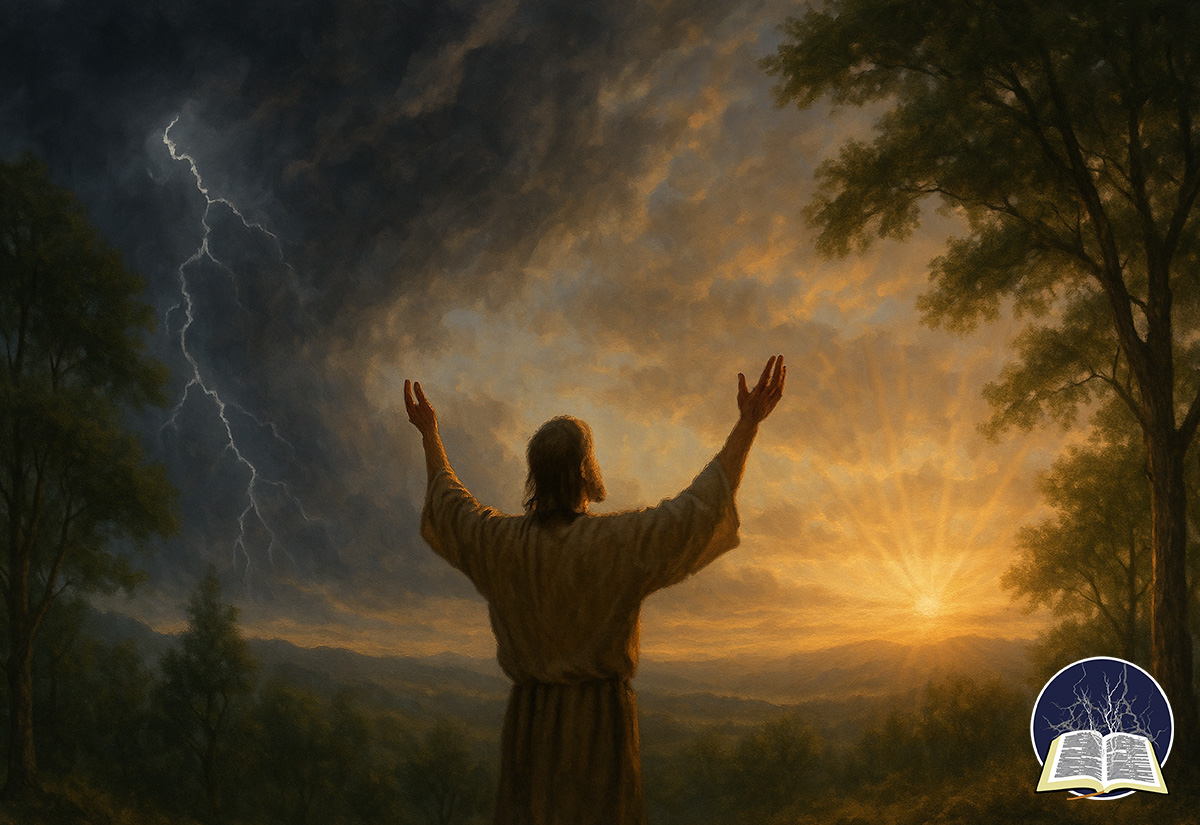
Why did Jesus need a secluded place to pray?
Before daylight the next morning, [Jesus] left for a secluded place, where he prayed. — Mark 1:35 The Discussion Bible
Jesus often withdrew to isolated places for prayer. This detail isn’t included in the Gospels to fill space on the page. It’s an intentional glimpse into his way of life. If Jesus, the Son of God, felt the need to pull away from the crowd and meet privately with the Father, what might that mean for us?
Not an Escape
In our culture, “getting away” often means avoiding the uncomfortable. We hide from awkward conversations, skip events that drain us, or look for a vacation to forget our responsibilities for a while. But this is not the pattern Jesus modeled.
He never withdrew because he disliked crowds. Quite the opposite. He lived for the crowds—with a deep desire to help people. He healed their diseases, fed their hunger, and taught them truth. He didn’t withdraw to avoid confrontation, either. He spoke directly to the Pharisees, addressing their hypocrisy. He stood his ground in the Temple. Facing death threats, he didn’t run.
His withdrawals were purposeful pauses, not retreats for relief. They were not about “getting away from it all” but about getting with God, in a way the crowd couldn’t allow.
You might step away from your desk, not because you hate your job, but because you need a private meeting with your manager to clarify your next move. Withdrawal should be strategic engagement, not an escape.
Deep Relationship with the Father
Jesus lived in awareness of the Father’s presence. That’s evident in what he did—healing the sick, casting out demons, and raising the dead. Yet he intentionally carved out moments of one-on-one connection. Why? Because relationships deepen through focused time together, which can’t happen in a crowd.
Think of a close friendship. You might see your best friend in group settings all the time, but something special happens when you share a quiet meal or a long walk together. That’s where deeper trust and intimacy grow. We may pray while driving, working, or walking—but there is a richness in setting aside a block of time to shut out distractions. These private encounters keep our relationship with God from becoming shallow or purely functional.
Preparation
Jesus’ withdrawals often came before significant spiritual moments. These were preparation times, not rest periods.
- Before launching his ministry, Jesus spent forty days in the wilderness, fasting and praying (Matthew 4:1–11). This wasn’t a retreat for comfort after baptism. It was intense spiritual preparation before facing public ministry and direct opposition from Satan.
- On the Mount of Transfiguration (Luke 9:28–31), Jesus withdrew with Peter, James, and John and met with Moses and Elijah, discussing the plan for Jesus’ death in Jerusalem.
- Before the cross, in the Garden of Gethsemane (Matthew 26:36–46), Jesus withdrew from the disciples to pray in agony. In preparation for the cross, the spirit was willing, but the flesh was weak. He needed to align his human nature with the Father’s eternal plan.
When we face major decisions—such as starting a ministry, changing jobs, or confronting a personal crisis—we often rush ahead in our own strength. Jesus’ example teaches us to prepare physically, emotionally, and spiritually first, so our actions are fueled by divine direction, not impulse.
Time to Refocus
Jesus often withdrew after a major ministry event. One striking example is after feeding the 5,000 (John 6:1–15). The crowd was ready to crown him king, but he stepped away. Why? To realign with the Father’s mission rather than human expectations.
In ministry, success can be as spiritually dangerous as failure. If we don’t pause to hear God’s perspective, applause can distort our priorities. Jesus didn’t ride the wave of public approval. He climbed the mountain to pray.
After a powerful worship service, a well-received sermon, or a major project at work, take time to seek God’s voice. Ask, What’s next? How should I interpret this moment? Where do you want me to focus now?
In the Midst of God’s Presence
Jesus didn’t withdraw because God was absent in the crowd. The presence of God is everywhere. He even knows our thoughts. We can be sure that Jesus’ connection was the strongest of any human on Earth. The Father’s presence was with Jesus everywhere he went. Withdrawal wasn’t about finding God. It was about tuning his human attention fully toward the Father’s will, without the distractions of ministry.
We see in John 12:28–29 that God can speak even in noisy, public moments. Some thought they heard thunder, others an angel, but those attuned to his voice heard clearly. Solitude is not a prerequisite for God to speak. But it might be a tool for us to hear better.
We can learn to “withdraw” internally even in a crowded place, closing out mental noise to focus on God. We need to learn to do that, practicing that process daily, which explains our need to pray without ceasing. But there is also a special value in finding physical solitude, as Jesus did, for a one-on-one talk with God.
Purposeful Solitude
Jesus’ withdrawals were:
- Relational — for one-on-one time with the Father.
- Preparational — before major ministry moments.
- Refocusing — after intense public work.
- Clarifying — to keep God’s voice central.
In our own lives, intentional withdrawal is spiritual strategy, not laziness—and not an escape from responsibility. Let’s not just escape from life when we withdraw. Let’s step afresh into God’s presence with purpose, and then leave for the crowd, renewed and ready for the work ahead.
Withdraw to Prepare
When crowds were pressing and pulling in near,
With questions and chatter for Jesus to hear,
He smiled at the people. He loved every one.
But often he paused when the day’s work was done.
He wanted to be alone in the hills or by the sea—
A place without people, where quiet would be.
He talked with his Father in a one-on-one share—
No crowd in the middle, just love in the air.
He wasn’t hiding from trouble or escaping the need.
He was seeking the next steps for planting the seed,
Preparing his heart for the work yet to come,
To follow the plan till his mission was done.
Into the wilderness or up the hills he’d climb,
To be alone with the Father—a special time.
In the peaceful connection, his strength would renew,
To step back among us and show what God knew.
So when life gets noisy and pulls you away,
Find moments for stillness, and take time to pray.
Don’t flee from your work, but draw in near,
To hear the One voice that you most need to hear.
For many more open-ended discussion questions for almost every verse in the Bible, check out The Discussion Bible