What must we do to “follow” the Lord? What rewards can we expect from that effort?
I have closely followed the Lord’s footsteps, never wandering. I’ve obeyed every direction from God’s lips. I’ve relished his words more than the food needed for my survival. — Job 23:11–12 The Discussion Bible
When Jesus said the truth would set people free, he was addressing those who thought they already had the truth nailed down—the Pharisees, the scribes, the religious elite. Imagine the audacity of telling scholars, experts, and spiritual leaders that they didn’t yet have the truth.
We search Scripture and think we know the truth, but the Pharisees did that, and their belief wasn’t really the truth. Might we think we have the truth, but God would like to show us what we didn’t know that we didn’t know?
Why People Resist Truth
Jesus telling the Pharisees they were wrong might be like telling medical specialists they don’t really understand medicine or telling seasoned pilots they don’t know enough about flying. Such claims damage our pride and our desire to believe we are in control.
Can we admit that we might not know as much as we think we know—and then surrender our religious prejudices for truth that would set us free? Doing that means confessing our ignorance and weakness, and few of us would enjoy that.
Truth threatens our illusions of independence.
The Protective Walls of Lies
When people don’t want to face truth, they surround their perception with layers of lies. These walls act like insulation, keeping conviction out. Imagine a man who says his failing business is fine. He takes out more loans, avoids opening the books, and tells employees, “We’re just in a slow season.” The more he protects the illusion, the deeper the collapse when reality breaks through.
The Pharisees built their wall of lies so high that even when Jesus healed the blind, raised the dead, and taught with authority, they accused him of working by Satan’s power. Protecting their version of “truth” mattered more than embracing God’s truth.
Before we ridicule such behavior, we should know that this is part of our human nature. We naturally do the same thing, and we naturally don’t want to admit it. But we will admit it, if we treasure what God speaks to our hearts more than what we would otherwise want to hear.
The Gateway to Freedom
To be healed, the Bible says we must first admit our faults (James 5:16). That’s the problem with the fake-it-until-you-make-it approach. The appearance of righteousness doesn’t make us righteous. Telling ourselves we are spiritually strong doesn’t make us mighty. It deprives us of the strength we need in Christ to handle the tough times ahead.
For as long as we claim to already have the truth, the door remains closed for giving up our misbeliefs for sake of God’s truth. Honesty before God and others can tear down the walls we build around our illusions, so we no longer protect them as sacred truths.
Staying Connected to Truth
Truth isn’t something we uncover once and then possess forever. Now, wait. That’s not right, is it? Once we know the truth, and by the Spirit we know it’s the truth, we have it. We don’t have to let go. We have it forever.
But there is a problem. It’s not the whole truth. We still need to know what we don’t yet know but need to know—at the time we need to know it. For that, we must walk closely with the One who holds all truth.
Prayer without ceasing keeps us aligned with God’s perspective rather than letting us slip back into our own perception of truth—which will be inadequate, moving forward. In Gethsemane, Jesus prayed until his will and the Father’s will were one. His humanity wanted escape, but in prayer he embraced truth.
Prayer clears the interference so our emotional compass stays true to God.
When “Truth” Becomes Unbelief
Sometimes what we call our “truth” is simply unbelief wearing religious clothing. The man who told Jesus, “I believe. help my unbelief.” (Mark 9:24), admitted his partial faith and opened himself to fuller truth. A person might say, “I trust God to provide, but I still have to manipulate circumstances just in case.” That kind of “truth” is unbelief.
Acknowledging unbelief is the first step toward having God’s truth replace the beliefs we’ve held until now.
The Role of Free Will
God never forces anyone to embrace truth. Free will means we can choose darkness, deception, or even self-destruction. Can we see how dangerous this might be for us? There’s a way that seems right but ends in death (Proverbs 14:12). If we want anything that opposes what God wants, we will inevitably embrace lies that appear to us as “truth.”
Pilate knew Jesus was innocent but chose political safety over truth. He literally washed his hands of responsibility, proving that awareness of truth without action is no freedom at all. Owning a map but refusing to follow it doesn’t get you to the destination.
Our free will says truth must be acted on, not just observed.
Shining Light
Jesus described believers as the light of the world (Matthew 5:14). Our job isn’t to force people to believe what they don’t want to believe. That effort will always be an exercise in futility. We do best to find a glimpse of God’s truth in the unbeliever and build truth upon their already-held truth. As we shine God’s truth, the lies lose their appeal.
When the apostle Paul spoke in Athens, he didn’t attack every false god in the city. Instead, he pointed to the altar of the Unknown God and used it as a bridge to reveal the truth about Jesus. Instead of quoting Scripture, which they wouldn’t accept, he quoted one of their beloved poets: “In him we live and move and have our being.”
The best way to expose a counterfeit is to live and share the genuine article.
Reward of Surrender
Truth requires sacrifice—surrender of pride, misbeliefs, and the feeling of being in control. But in that death comes life. Like a patient who surrenders to surgery, we give up control to the Great Physician—not because it’s easy, but because it’s the only way to healing.
At the heart of truth is a choice: Will we cling to our perception, or will we surrender to God’s reality? Our emotions may deceive us, our culture may pressure us, but only God’s truth stands eternal.
Truth Consumed
I might think I know truth. Oh, I can claim it’s so.
Worn like a badge, I look good for the show.
But truth isn’t found in a badge or a claim.
It lives in God’s Spirit, not fortune or fame.
If I cling to my “truth” like it’s shiny and bright,
I might miss the glory of standing in God’s light.
I can ignore his reality with my excuses and lies,
And miss all the freedom that his truth buys.
Confession’s the key that will open the door.
If I’ll admit my blindness, I’ll stumble no more.
James said it plainly: “Confess and be healed,”
And God’s gentle mercy will soon be revealed.
I must pray without ceasing, bringing truth to my mind.
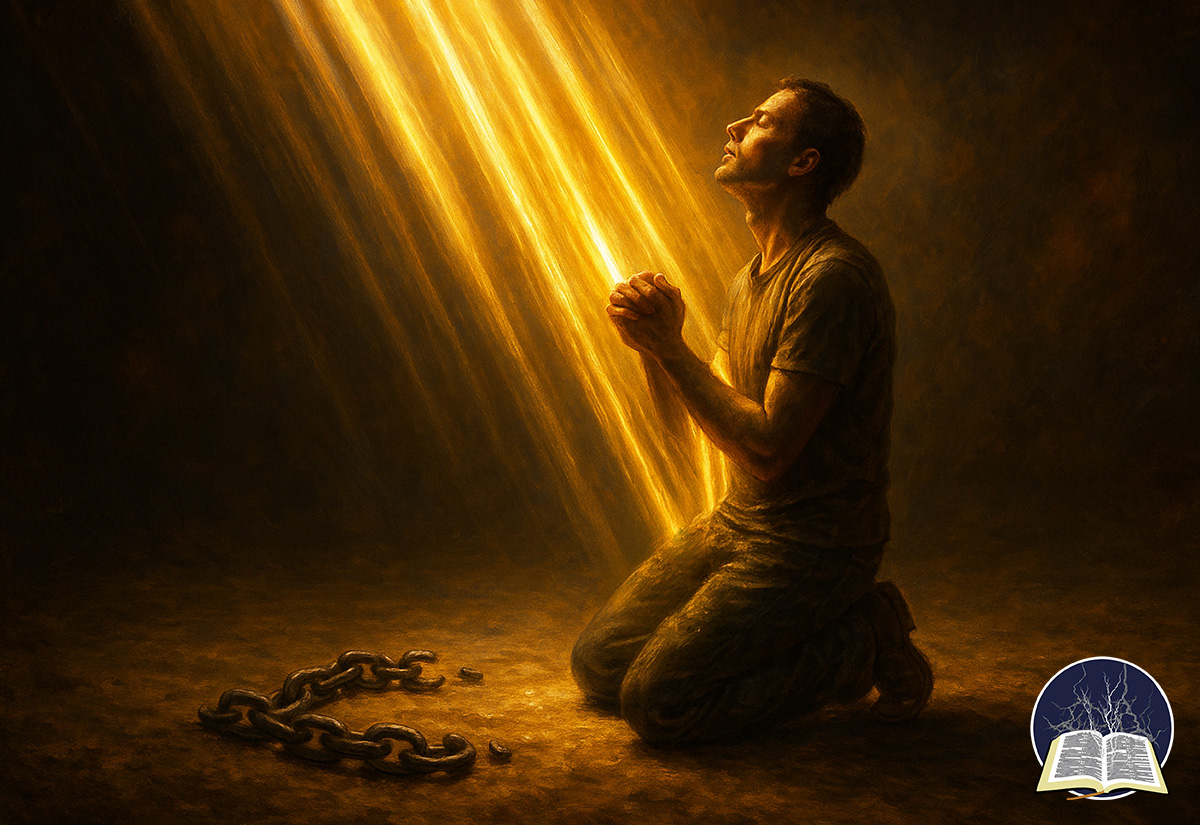
My misbeliefs first crumble, then the chains are left behind.
God’s truth is not cruel. It’s a wonderful gift from above,
Replacing my misconceptions with his abundant love.
Like Pilate who asked Jesus, “What is truth?”
I have but one resource for absolute proof.
The Truth is revealed through the Word made flesh,
Who came to redeem us, our souls to refresh.
Some build little castles of “truth” in their head,
With pillows of “maybe” and blankets of dread.
They paint it all pretty with colors so bright,
But truth flicks the switch, and on comes the light.
The Pharisees said, “We’ve got truth to spare.”
But Jesus said, “No, your truth isn’t there.
I am the real truth, and I’ll set people free,
But only if hearts will stop fighting with me.”
So don’t fake it. Don’t bake it. Don’t dress up a lie.
Don’t wrap it in ribbons and serve it as pie.
The truth may taste bitter, but it soon will be sweet,
Because freedom’s the prize when it’s God’s truth you eat.
For many more open-ended discussion questions for almost every verse in the Bible, check out The Discussion Bible