
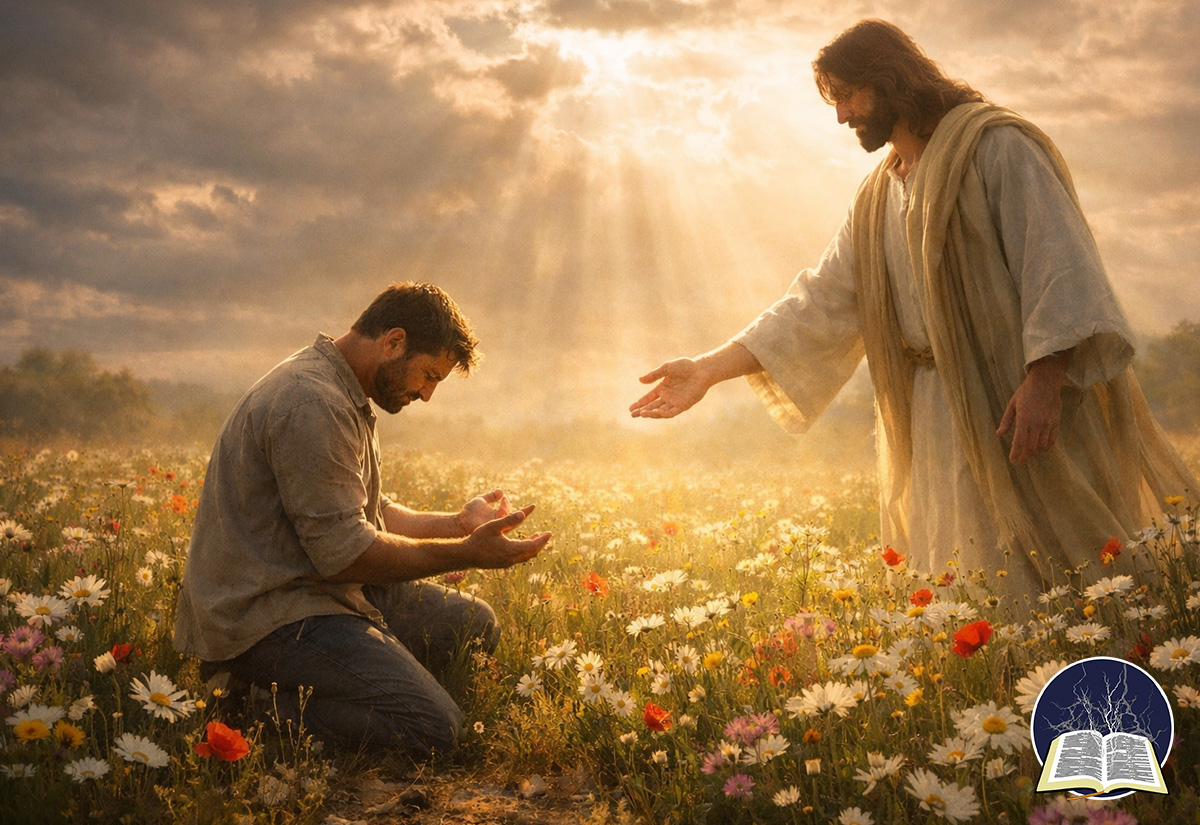
Why might the leper have thought Jesus might not want to heal him?
A leper kneeled before him, begging. “Sir, you could make me well if you wanted to.” — Matthew 8:2
Many prayers are recorded in Scripture—bold prayers, desperate prayers, and persistent prayers. But few are as unusual, as unsettling, and as revealing as the time when a leper said Jesus could heal him—if he wanted to. It’s not a long prayer. It isn’t eloquent. It doesn’t even meet our criteria for faith believing. Yet it might be one of the most profound prayers ever spoken.
A Prayer that Refuses to Demand
Most prayers carry a subtle expectation: God, please do this. God, fix this. God, change this. But this man prays differently. He doesn’t instruct. He doesn’t insist. He doesn’t claim a promise. Instead, he places his faith on one question, whether Jesus wants to heal him. That’s what makes the prayer so strange.
When has anybody ever prayed, “God, heal me if you want to”? From this prayer, we know the man is…
- Absolutely certain of Jesus’ ability.
- Completely surrendered to his will.
In a world that encourages us to “claim what is rightfully ours,” this man simply trusts Jesus for the outcome, a striking reversal of expectation. The tension is not in whether Jesus can act—but whether he will.
A Posture Speaking Louder than Words
The Gospels describe the leper’s approach in layered detail. Matthew says he worships. Mark says he kneels. Luke says he falls on his face. Put together, we see a case of complete surrender, not a composed request. He comes undeserving. No credential. No claim. No leverage. Only a need. And that’s enough.
This is a reminder that posture and attitude of heart communicates more powerfully than the words we say. A single act—falling before Jesus—tells us everything about the man’s condition, his belief, and his hope.
Condition Beyond Human Help
Luke adds a detail that intensifies the moment, saying he was “full” of leprosy. So this was not an early stage of the disease. His condition wasn’t manageable. Doctors were of no help. He was cut off from society. No one came near him. No one touched him. No one could help him. So now we see the desperate nature of his prayer.
Jesus is his last and only hope. Yet he doesn’t make a claim based on his plight. He doesn’t say, I don’t deserve this or I’ve suffered long enough. Nor is he saying, I know I’ve been a bad boy, punished for my sin. Instead, his simple prayer said he’d accept his condition, hopeless as it seemed to be, if that’s what God wanted.
The Touch that Breaks Every Rule
Mark gives us one of the most stunning details, saying Jesus was moved with compassion and touched him. Nobody else would touch a leper, but Jesus did. And something extraordinary happens: The uncleanness does not transfer to Jesus. Cleanliness transfers to the man. This is the Gospel in action. When we present ourselves broken before Christ, his touch restores what was broken.
The prayer is strange because it leaves the outcome entirely in Jesus’ hands. The answer is powerful because it reveals the heart of God.
Why This Prayer Still Feels Strange
Even today, this prayer feels uncomfortable. Why? We prefer certainty. We want guarantees. We prefer outcomes we can name in advance. In other words, we want to be in control, which is the way of the world. But surrender to God’s will puts him in control, and the leper’s prayer does exactly that, expressing…
- Trust without control.
- Faith without demand.
- Hope without presumption.
This is not a weak prayer. It’s a surrendered one. And perhaps that is why it feels so strange.
The Invitation Hidden in the Prayer
A commonly misunderstood verse is often used to support our prayerful claim to what we want. “You have not because you ask not” (James 4:2). But in that chapter, the leader of the Jerusalem church was correcting Christians for their attitude of prayer, saying their self-serving desires brought strife and was one reason they weren’t getting what they wanted.
Strange as the leper’s prayer might seem, it’s consistent with what Jesus said in the model prayer, to ask for God’s will on Earth. Jesus himself prayed, “Not my will but yours be done.” Do we dare pray such a strange prayer ourselves?
We can if we believe Jesus’ words: “Why worry about clothes? Look how the wildflowers grow in the fields. They do not spin yarn or weave fabric. Yet Solomon in his greatest splendor was never dressed like one of them. If God clothes the wildflowers that are here now and gone tomorrow, don’t you suppose he will care for you? Why do you have such weak faith?” (Matthew 6:28–30). The apostle Paul said our needs would be supplied according to God’s richness and glory by Christ Jesus (Philippians 4:19). He didn’t say we had to pray to have our needs met. In fact, he said we don’t know how to pray, not without guidance from the Holy Spirit (Romans 8:26). Now that insight makes perfect sense if we realize that God’s “richness and glory” he will use to supply our needs is greater than anything we can imagine.
The best prayer is not for what we want, but to trust God’s will, knowing he understands our needs better than we ever could.
And he will faithfully provide.
Questions to Ponder
- Why does a prayer of surrender feel more difficult than a prayer of certainty?
- In what areas of your life are you confident in God’s ability but uncertain of his willingness?
- How does Jesus’ response reshape your understanding of God’s heart?
- What would it look like for you to pray, with sincerity, “If you are willing…”?
For many more open-ended discussion questions for almost every verse in the Bible, check out The Discussion Bible