Don’t paint boring word pictures when you could do oh-so-much more than just slap words onto the page without careful thought. — C. S. Lakin
In 1927, advertising executive Frederick Barnard popularized the saying: “A picture is worth a thousand words.” Is that true in education as well as advertising? When I was three, I watched my Sunday school teacher bring stories to life using felt-backed people and props that magically stuck on the flannel board. With each added character, I was given a better picture. I joined the laughter when the frequently used Joseph curled and fell to the floor.
Since our brains are wired to learn through sight and sound, writers can captivate readers with words—that is, if they paint vivid scenes with action and sound.
Pictures Bring Life to the Story
Many years ago, when my skills in computer programming and business administration paid the bills, I was studying how to be more creative, write well, and tell great stories. My thoughts ran with numbers, words, and lists—a colorless world without pictures. At my son’s high school football game, when he wasn’t out on the field, I opened my textbook to view full-page color pictures and how those images were crucial for effective storytelling. That night, I could hardly sleep as those pictures continually appeared in my dreams.
The next morning when I sang in the choir, I expected to visualize notes on the staff and sing the words, same as usual. Never in my computer-oriented world had I ever visualized a picture with the message that accompanied the music. As I sang “Behold the Lamb,” I looked toward the balcony and saw Jesus on the cross, as real as if I’d been there, thousands of years ago. I’m not sure how I explain my uncontrolled tears. Extreme gratitude, no doubt.
I’ve been writing from pictures ever since.
Write in Technicolor
The widespread introduction of color in the 1950s transformed black-and-white cinema into a vibrant visual experience. At the same time, readers became less interested in detailed descriptions of landscape and weather. With the big screen, they already had mental images of the Old West or the streets of Hong Kong, although they’d never been there physically.
Writing in technicolor required something beyond scene descriptions of what was already familiar. Readers wanted to become the main characters in the stories, so thunderstorms weren’t important unless they felt soaked to the skin. A car wreck was meaningless unless readers were with the driver, crushed behind the steering wheel. What was happening needed to affect characters emotionally. Without that, what used to be great classic stories were now boring.
Color the Character
Engaging readers today requires less on the paint of the backdrop and more on the pulse of the people within the scene. What people say, how they say it, and what they choose to do in the face of conflict is what brings a narrative to life.
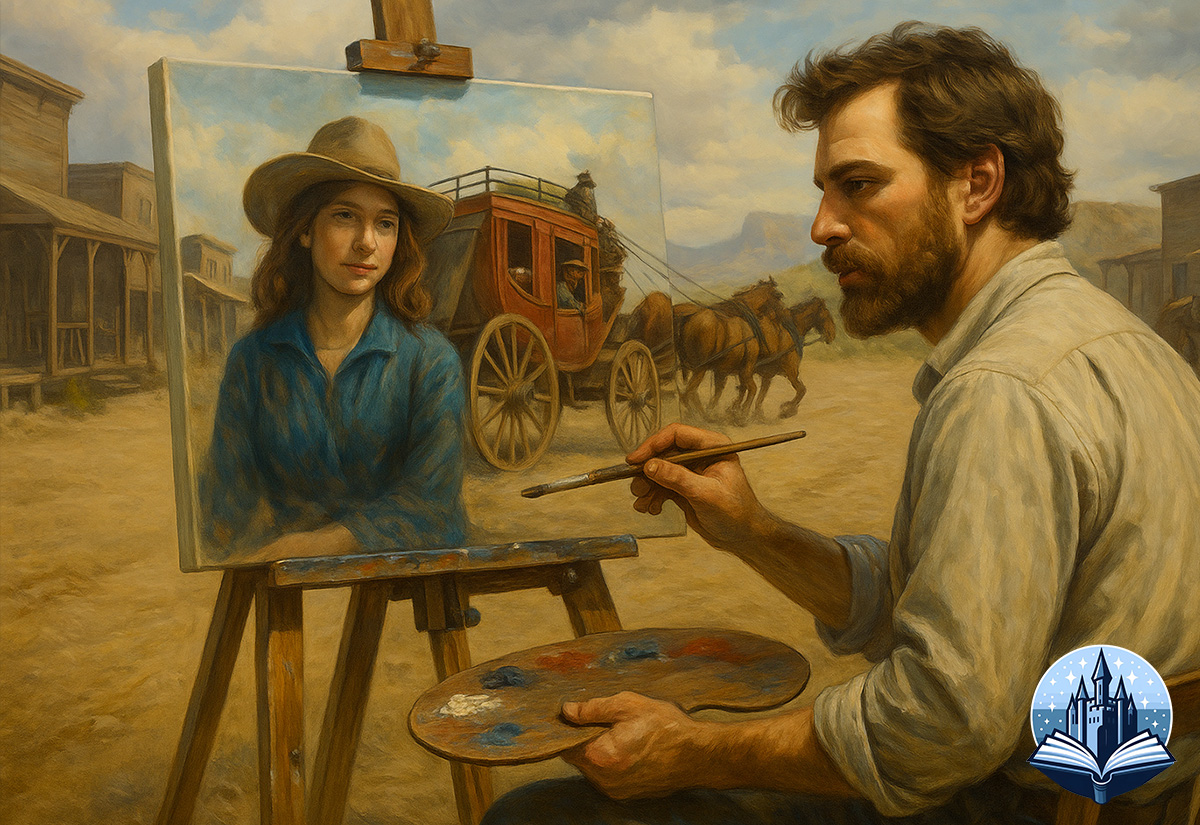
Readers want flawed, raw, and relatable individuals. The flick of an eyebrow, the hesitation before a lie, or the reckless courage of a desperate act are the new brushstrokes for the skillful art of storytelling. Motivation matters more than mayhem. No longer is the color found in the gunfight. It’s in why the man pulled the trigger.
Stories shine brightest when writers color the characters, not the scenery.
Sharpen the Image
Without a vivid picture in our minds, we can lazily generalize, using less-than-specific nouns and verbs. Touching a dog is a vague visual. Was it a collie, dachshund, or rottweiler? Was the touch a caress or hesitant out of fear?
The more precise the word, the clearer the picture. Is the girl merely walking? Not if she limps, stomps, or tiptoes. A man doesn’t just drink, not if he gulps, sips, or slurps. These choices matter. Besides showing what happens, they reveal something about how the character feels, which is crucial to give readers the sense of being the character.
A “vehicle” is forgettable, but a “rusty red Toyota pickup with a missing tailgate” creates a memorable picture. Instead of writing what first comes to mind, push yourself back into the scene to see the details that matter. Being specific is the difference between someone “watching a storm” and being “the boy who watches through a cracked window as lightning splits the sky.
Specific nouns and vivid verbs act like a lens, bringing the moment into sharp focus. The sharper the image, the more that readers will be immersed in your story.
Writing Prompts Based on Famous Pictures
Writing from pictures is a powerful tool to overcome writer’s block, improve descriptions, and add emotional depth to your stories. The next time you’re staring at a blank page, grab a photo and let your imagination take over.
- The Starry Night — Vincent van Gogh (1889): You are inside the village under the swirling night sky. But tonight, something is different—the stars are whispering secrets. What do they say?
- The Girl with a Pearl Earring — Johannes Vermeer (1665): The girl in the painting has a story, a past, and a secret she has never told anyone. Write about her life before or after the moment captured in the painting.
- Lunch Atop a Skyscraper — Charles C. Ebbets (1932 Photo): It’s 1932, and you are one of the workers balancing on a steel beam high above New York City. What thoughts go through your mind as you take a break, eating your lunch? What is your biggest dream or fear?
- The Persistence of Memory — Salvador Dalí (1931): Time is melting away, and reality is shifting. You wake up to find the clocks in your home have started dripping like wax. What happens next?
- Migrant Mother” – Dorothea Lange (1936 Photo): You are the child in the famous Dust Bowl photograph. Decades later, you look back at that moment frozen in time. Write a letter to your mother, reflecting on that day and what life has become.
Your Challenge: Find a picture today and write a 200-word story inspired by it. You might be surprised where it takes you.
For a practical guide to storytelling, check out Storytelling at Its Best