Real publishing support makes a significant investment in your work. A scam asks you to invest in their promise. — Frank Ball
Every aspiring writer dreams of being discovered. After hours of writing, revising, and pouring our hearts onto the page, an unexpected email praising our work can feel like a breakthrough. But sometimes, what looks like opportunity is actually a trap—and learning to recognize it can save you time, money, and disappointment.
Email That Feels like an Answer
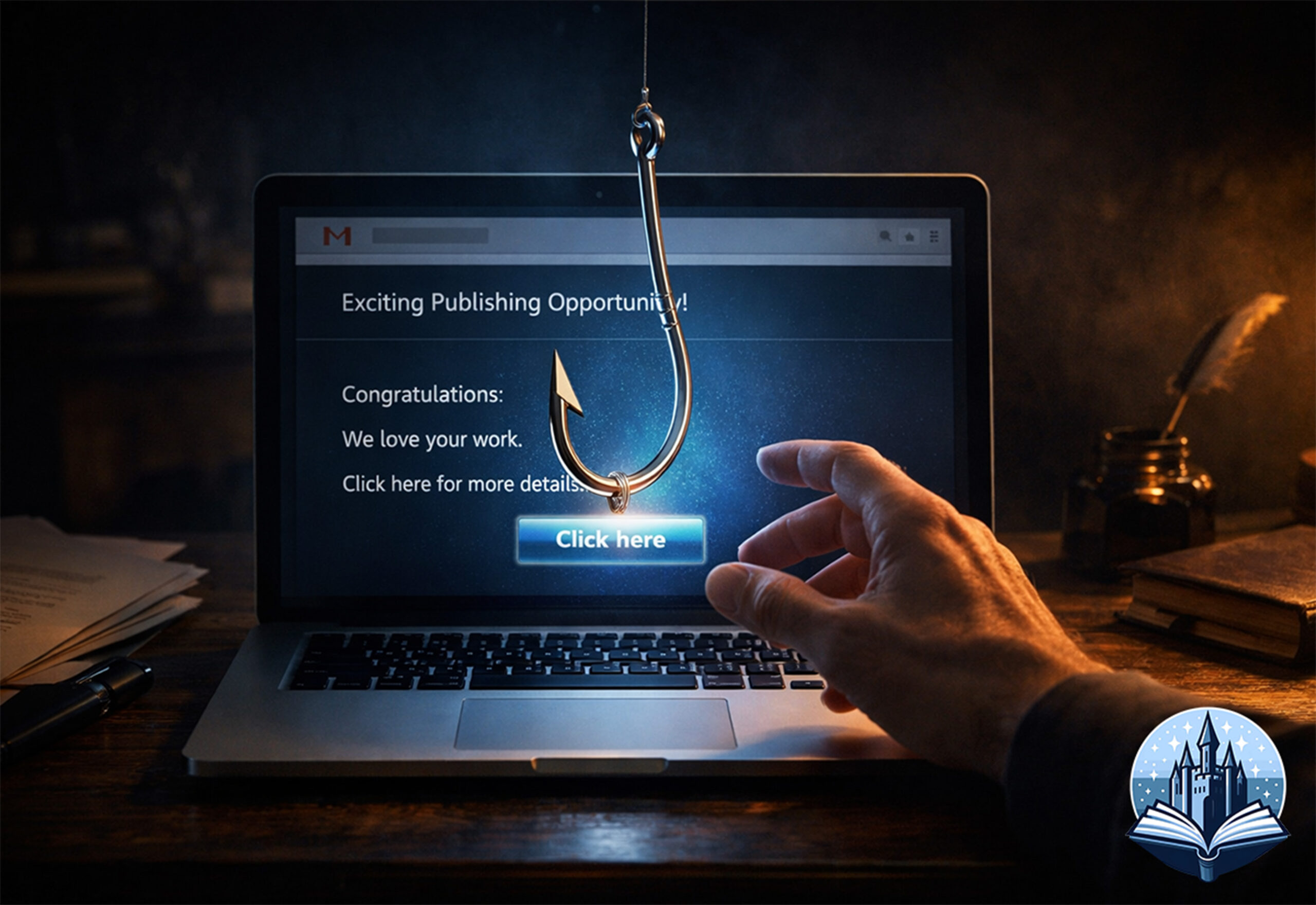
The message often begins with a flattering message. Someone claims to have “found your work” and believes it has great potential. They may introduce themselves as part of a group like Wordsmiths & Writers or something equally impressive-sounding.
At first glance, it feels like validation. But pause for a moment. Real opportunities rarely arrive this way, especially from unknown organizations with no verifiable presence.
Why Writers Are Prime Targets
Writers are uniquely vulnerable to these scams—not because we’re naïve, but because we’re hopeful. We’ve invested time, creativity, and emotion into our work. So when someone notices, it’s hard not to be interested.
Scammers understand this. They target:
- New authors seeking exposure.
- Self-published writers looking for marketing help.
- Creatives who feel overlooked or under-recognized.
They offer what every writer wants: visibility, credibility, and success—just within reach.
Red Flags You Should Never Ignore
When evaluating any outreach, watch for these warning signs:
- No Real Online Presence: If you can’t find a legitimate website, portfolio, or verified business listing, that’s a serious concern. Real companies leave a digital footprint.
- Generic or Free Email Addresses: An email like [email protected] is not how professional publishing or marketing companies operate. Established businesses use domain-based emails tied to their brand.
- Vague Praise, No Specifics: Scam messages often sound flattering—but generic. For example, “We love your work and see great potential…” If they don’t reference anything specific you’ve written, they probably haven’t read it. They phishing.
- Requests for Money or Membership Fees: Sooner or later, the ask comes. A “small” marketing fee. A membership cost. A paid promotion package. Legitimate publishers pay authors. They don’t charge them to be recognized.
- Pressure or Urgency: Scammers often push for a quick decision, such as “Limited spots available…” or “Act now to secure your opportunity…” Real opportunities don’t disappear overnight.
The Most Dangerous Lie
“This Is your Big Break.” This emotional hook is powerful: What if this is the opportunity you’ve been waiting for? But here’s the truth: Your calling is not dependent on a random email from a stranger.
Real growth as a writer comes through:
- Consistent practice
- Honest feedback
- Authentic platforms
- Relationships built over time
There are no shortcuts to meaningful success.
A Better Path Forward
Instead of chasing questionable opportunities, invest your energy where it matters:
- Build your platform: blog, email list, and social presence.
- Connect with trusted writing communities.
- Learn the publishing process, both traditional and self-publishing.
- Seek feedback from credible mentors or editors.
Opportunities that are real will stand up to scrutiny.
A Simple Rule That Will Protect You
If you remember nothing else, remember this: If a “publisher” or “marketing group” contacts you using a Gmail account and asks for money—it’s almost always a scam.
Don’t let scams discourage you or make you cynical. The fact that you’re writing—that you care about your craft—is already meaningful. Guard that calling wisely.
Your words matter. Your voice matters. And the right doors will open—not through deception, but through faithfulness, growth, and truth.
For a practical guide to storytelling, check out Storytelling at Its Best