
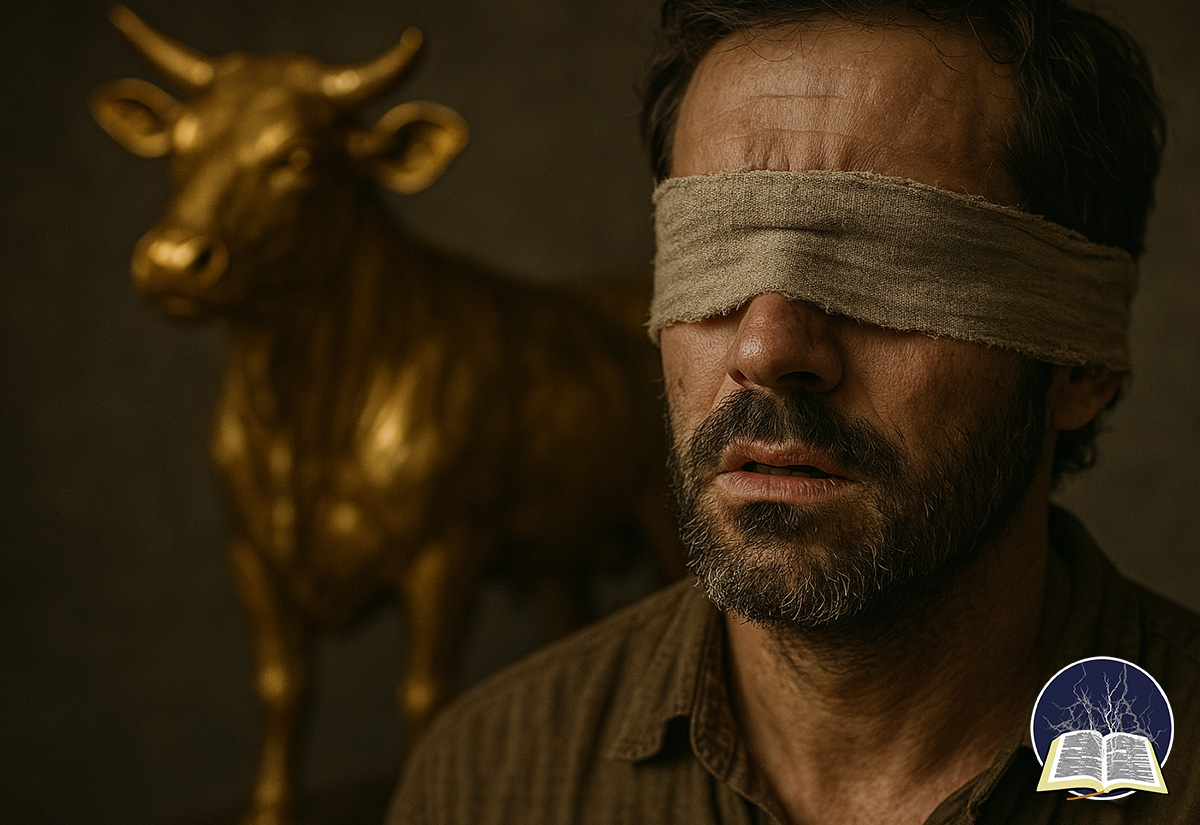
How can it be blameless to be blind?
“If you were blind,” Jesus said, “you would be blameless. But because you say you can see, you remain blind.” — John 9:41 The Discussion Bible
It’s a stunning paradox. We often associate blindness with ignorance, weakness, or error. But Jesus flips the idea on its head. The real danger is not blindness itself, but the pride that says, “I already see clearly.” With that claim, we miss what we otherwise could see, maintaining our blindness.
The Blind Pharisees
Jesus condemned the religious elite, not the sinners who knew they were sinners. He called the Pharisees “blind guides.” Not only did they refuse to see Jesus’ life-saving truth, but they led people in rituals, rules, and a false sense of righteousness. By professing to know God when they really didn’t, they were headed for a spiritual abyss and were taking other blind people with them.
These men were not fools. They were brilliant scholars, revered teachers, and defenders of Scripture. But their knowledge became a trap. Instead of using Scripture to lead people to God, they used it to build platforms for power. They elevated their interpretations of the Law above the heart of the Lawgiver.
Their idolatry wasn’t golden calves or pagan altars. It was their own out-of-focus understanding.
Interpretation as Idolatry
In Christianity, a dangerous idolatry forms when our understanding of Scripture becomes more important to us than a relationship with the One who inspired it. Passionate study of God’s Word is good, but we don’t want to be so committed to our theological prejudices that we can’t see new truth—even if it comes from the mouth of Jesus.
The Pharisees rejected Jesus because he didn’t fit their perception of godly behavior. He healed on the Sabbath. He touched the unclean. He ate with sinners. He forgave before sacrifice. In their eyes, he was breaking the very Law they had devoted their lives to defend. But Jesus was the Law fulfilled.
When we cling to our interpretations more tightly than to the Spirit of Truth, we risk becoming idolatrous blind guides like the Pharisees.
The Modern Pharisee Church
If the Pharisees had been seeking to hear God, they would have recognized Jesus. But they weren’t seeing. They were clinging to their image of God that wasn’t really God. Although it was formed from Scripture, that image had become an idol.
As we read the Gospels, we might shake our heads at the Pharisees, wondering how they could be so blind. But this story isn’t just a warning about ancient men with long beards and flowing robes. They are much like who we might be today if we don’t open our eyes.
Either out of fear or tradition, many churchgoers, pastors, and religious leaders misinterpret God’s Word so they can uphold a doctrine, follow denominational teaching, or maintain a personal sense of control. We cherry-pick verses to prove our points. Devoted to our religious traditions and what makes us popular, we build elaborate systems of theology and then exclude anyone who doesn’t agree.
Saying we can see, the modern Pharisee church makes itself blind to the Spirit’s guidance into all truth.
The Comfort of Certainty
Why do we cling to our interpretations? Because certainty is comforting, making us feel secure, as if we have everything figured out. Since we’re right, others must be wrong. We love that certainty. But the gospel was never about certainty. It was about trust.
The apostle Paul wrote about the process of change “from glory to glory.” He’s saying that yesterday’s glory isn’t good enough for today. The glory of last year or even last weekend isn’t for today. God would like to lead us forward with new insights.
This transformation requires us to admit that we might be wrong, an uncertain feeling that we may not see everything clearly, that we need to learn from the Spirit daily.
Uncertainty makes us uncomfortable. Polishing an idol of doctrine is easier than carrying a cross of surrender.
The Way to True Sight
The way to spiritual clarity isn’t through intellectual mastery. We must come to God in humility, admitting our blindness and crying out for his sight. Our works won’t save us. Neither will our thinking too highly of ourselves. But we will be saved through our willingness to be led by the One who sees all things as they really are.
Seeing with the Heart
Jesus spoke in parables for good reason. Truth was hidden so those who wanted to see would ask, “What does this mean?” Those who wanted to see would see. But those who thought they already could see weren’t forced to see what they didn’t want to see.
Admitting we are blind is faith, not failure. That confession invites Jesus to touch our eyes and give us sight. When we stop listening, stop questioning, and stop surrendering to the leading of the Holy Spirit, we risk making idols of our interpretations.
Jesus is still speaking.
The Spirit still leads.
But only the blind who know they are blind will truly see.
For many more open-ended discussion questions for almost every verse in the Bible, check out The Discussion Bible