
From where did John get the term “Lamb of God”?
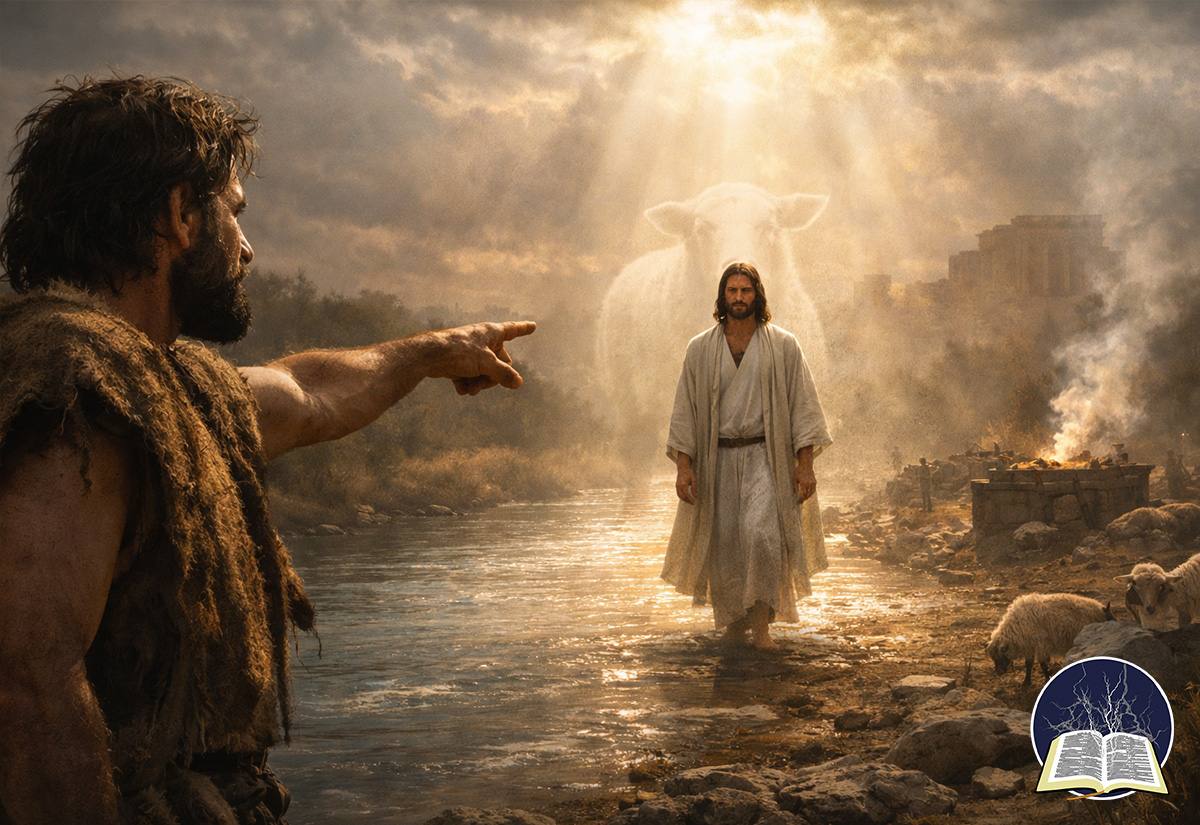
John saw Jesus coming and shouted, “Look. The Lamb of God, who takes away the sin of the world. He is the one I was talking about when I said, ‘A man is coming after me who is much greater than I am’ because he existed long before me.’” — John 1:29–30 The Discussion Bible
When John the baptizer pointed to Jesus and declared, “Behold, the Lamb of God, who takes away the sin of the world,” he was connecting dots for a picture never seen before.
That single sentence gathered historical perceptions of sacrifice, prophecy, and worship to identify the Messiah with a previously unheard phrase.
The Unheard Phrase
No known Jewish text before John uses the exact phrase “Lamb of God.” Yet the pieces of the puzzle were there, so it would make perfect sense when John used it. God often works this way, having the end set from the beginning. He doesn’t discard history. He completes it. Like a final puzzle piece, revelation snaps into place only after all the groundwork has been laid.
Jesus was not a surprise interruption in Israel’s story. He was the long-awaited conclusion.
The Passover Pattern
The foundation of lamb imagery begins in Egypt, when a spotless lamb was slain and its blood marked the doors of Israelite homes. Judgment passed over, not because the people were righteous, but because a lamb had died in their place. That night became the defining moment of Israel’s identity.
When John called Jesus “the Lamb of God,” he was declaring a new Exodus—not from Egypt, but from sin and death itself. This Lamb would do more than protect one household or one nation for one night. He made deliverance available for the entire world.
The Daily Reminder
Every morning and evening, lambs were sacrificed at the Temple. These offerings were not dramatic. They were routine. And that was the point. Sin was not an occasional problem—it was a constant one.
Like interest on an unpaid debt, guilt accumulated daily. The endless sacrifices reminded Israel of their need for a sin-free relationship with God. Each sacrificial lamb looked toward forgiveness and transformation.
John’s declaration expanded that insight with divine revelation. Pointing to Jesus, he didn’t say, “Here is another sacrificial lamb.” He said, “Here is the Lamb, the one who will eliminate sin from this world.”
Today, we still need the daily reminder to maintain our relationship with God, for Jesus said, “Each time you eat bread or take a drink, remember me.”
A Suffering Savior
Centuries earlier, a prophet wrote about the coming Savior: “He was abused and beaten down, but he did not say a word. Like a lamb about to be slaughtered or a sheep before its shearers, he did not say anything” (Isaiah 53:7). Our Saviour would suffer, not for his own guilt, but for the sins of others. This lamb-like figure would bear wrongdoing, bring peace, and justify many.
With the ancient poetic concept of our need for salvation, John connected the promise with its fulfillment in Jesus, a living flesh-and-blood “lamb” to be sacrificed.
Dealing with Sin
The Law and sacrificial lambs brought awareness of sin but did little to change people’s hearts. The blood of animals created space for mercy, but a better sacrifice was needed for eternal forgiveness and transformation. It was impossible for the blood of bulls and goats to take away sins (Hebrews 10:4).
John’s language was startling. This Lamb would take away the sins of the world. Like replacing a leaking roof instead of mopping the floor every time it rains, Jesus came to heal the disease, not just treat the symptoms.
Salvation for the Entire World
Perhaps the most radical word in John’s declaration was “world.” Jewish sacrifices had always focused on God’s chosen people. But John proclaimed a Lamb whose work would extend beyond the Israelites—fulfilling the promise to Abraham that all people on Earth would be blessed (Genesis 12:3).
What was once local would become global. What began in a single family would reach every nation on Earth.
Not Religious Guesswork
John didn’t study under Gamaliel or join the priesthood. His message came from his time in wilderness being taught by the Lord. By his own admission, he would not have known Jesus was the Messiah except that the One who sent him to baptize with water told him what to watch for (John 1:33).
To behold the Lamb of God is more than simply to analyze. We pause, recognize, and respond. The Lamb still stands at the center of the story—ancient in promise, complete in fulfillment, and sufficient for every soul.
John’s invitation to “behold the Lamb of God” remains the same today. Look. See. Believe.
For many more open-ended discussion questions for almost every verse in the Bible, check out The Discussion Bible
John saw Jesus coming and shouted, “Look. The Lamb of God, who takes away the sin of the world. He is the one I was talking about when I said, ‘A man is coming after me who is much greater than I am’ because he existed long before me.’” — John 1:29–30 The Discussion Bible
When John the baptizer pointed to Jesus and declared, “Behold, the Lamb of God, who takes away the sin of the world,” he was connecting dots for a picture never seen before.
That single sentence gathered historical perceptions of sacrifice, prophecy, and worship to identify the Messiah with a previously unheard phrase.
The Unheard Phrase
No known Jewish text before John uses the exact phrase “Lamb of God.” Yet the pieces of the puzzle were there, so it would make perfect sense when John used it. God often works this way, having the end set from the beginning. He doesn’t discard history. He completes it. Like a final puzzle piece, revelation snaps into place only after all the groundwork has been laid.
Jesus was not a surprise interruption in Israel’s story. He was the long-awaited conclusion.
The Passover Pattern
The foundation of lamb imagery begins in Egypt, when a spotless lamb was slain and its blood marked the doors of Israelite homes. Judgment passed over, not because the people were righteous, but because a lamb had died in their place. That night became the defining moment of Israel’s identity.
When John called Jesus “the Lamb of God,” he was declaring a new Exodus—not from Egypt, but from sin and death itself. This Lamb would do more than protect one household or one nation for one night. He made deliverance available for the entire world.
The Daily Reminder
Every morning and evening, lambs were sacrificed at the Temple. These offerings were not dramatic. They were routine. And that was the point. Sin was not an occasional problem—it was a constant one.
Like interest on an unpaid debt, guilt accumulated daily. The endless sacrifices reminded Israel of their need for a sin-free relationship with God. Each sacrificial lamb looked toward forgiveness and transformation.
John’s declaration expanded that insight with divine revelation. Pointing to Jesus, he didn’t say, “Here is another sacrificial lamb.” He said, “Here is the Lamb, the one who will eliminate sin from this world.”
Today, we still need the daily reminder to maintain our relationship with God, for Jesus said, “Each time you eat bread or take a drink, remember me.”
A Suffering Savior
Centuries earlier, a prophet wrote about the coming Savior: “He was abused and beaten down, but he did not say a word. Like a lamb about to be slaughtered or a sheep before its shearers, he did not say anything” (Isaiah 53:7). Our Saviour would suffer, not for his own guilt, but for the sins of others. This lamb-like figure would bear wrongdoing, bring peace, and justify many.
With the ancient poetic concept of our need for salvation, John connected the promise with its fulfillment in Jesus, a living flesh-and-blood “lamb” to be sacrificed.
Dealing with Sin
The Law and sacrificial lambs brought awareness of sin but did little to change people’s hearts. The blood of animals created space for mercy, but a better sacrifice was needed for eternal forgiveness and transformation. It was impossible for the blood of bulls and goats to take away sins (Hebrews 10:4).
John’s language was startling. This Lamb would take away the sins of the world. Like replacing a leaking roof instead of mopping the floor every time it rains, Jesus came to heal the disease, not just treat the symptoms.
Salvation for the Entire World
Perhaps the most radical word in John’s declaration was “world.” Jewish sacrifices had always focused on God’s chosen people. But John proclaimed a Lamb whose work would extend beyond the Israelites—fulfilling the promise to Abraham that all people on Earth would be blessed (Genesis 12:3).
What was once local would become global. What began in a single family would reach every nation on Earth.
Not Religious Guesswork
John didn’t study under Gamaliel or join the priesthood. His message came from his time in wilderness being taught by the Lord. By his own admission, he would not have known Jesus was the Messiah except that the One who sent him to baptize with water told him what to watch for (John 1:33).
To behold the Lamb of God is more than simply to analyze. We pause, recognize, and respond. The Lamb still stands at the center of the story—ancient in promise, complete in fulfillment, and sufficient for every soul.
John’s invitation to “behold the Lamb of God” remains the same today. Look. See. Believe.
For many more open-ended discussion questions for almost every verse in the Bible, check out The Discussion Bible