
Confusion is confusing because we cannot readily see the discordant parts that comprise it. — Thomas Harris
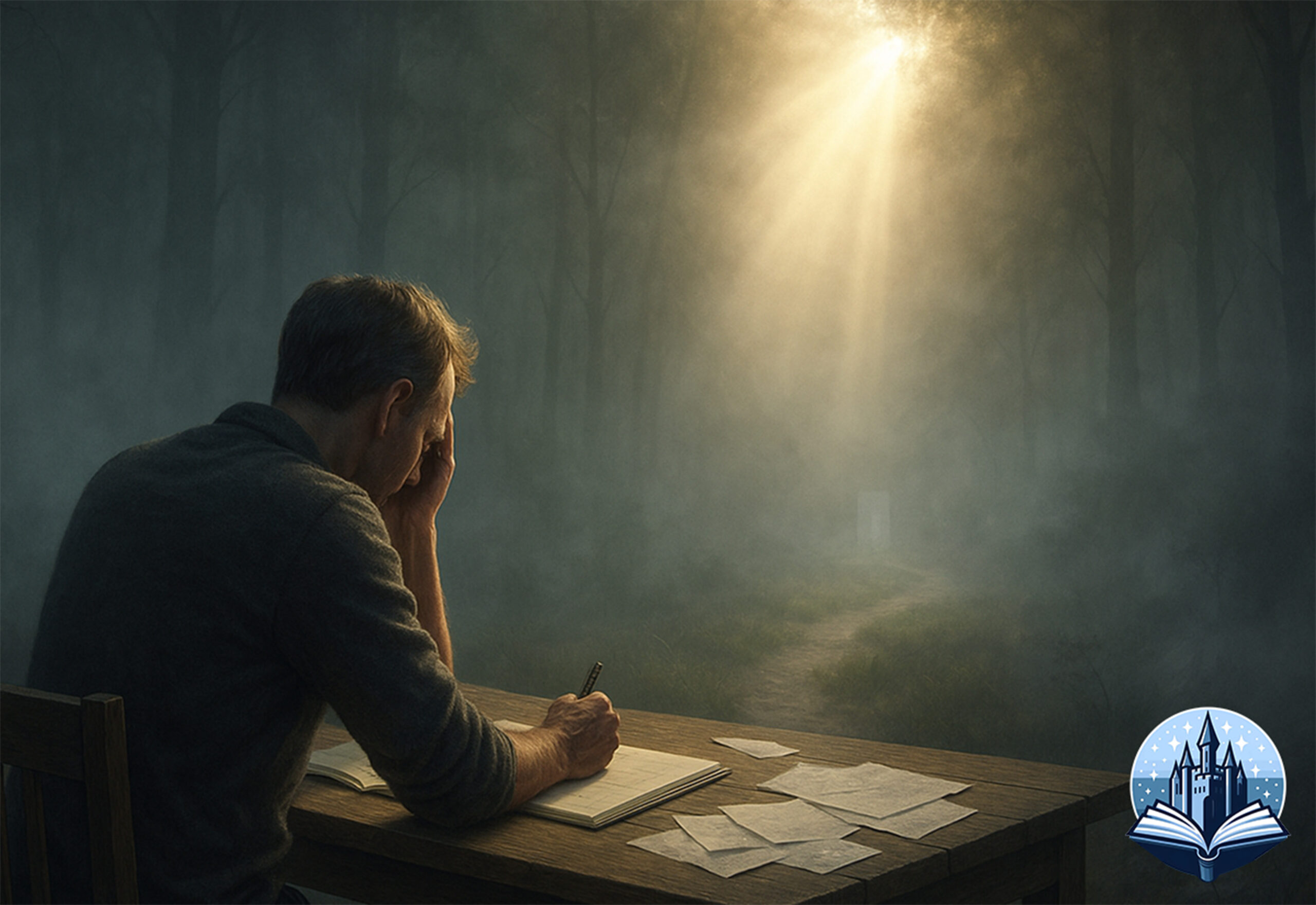
Confusion isn’t loud, dramatic, or obvious. It creeps in like a gentle fog and settles over our minds until we can’t be sure where the obstacles came from. Many aspiring authors have lived with confusion so long that it feels normal.
So what if we are confused? We don’t have to stay that way. God provides a path to clarity—if we’re willing to follow it.
Confusion Feels Normal
Writers often get stuck, not because their idea is bad, but because they’ve lived in uncertainty for so long that it feels normal. You reread a chapter for the tenth time and still don’t know whether it works. You wonder whether you should outline more or start writing. You doubt your voice, your structure, or your skill. Sound familiar? That’s confusion talking.
Scripture says a “double-minded person is unstable in all their ways” (James 1:8). Uncertainty in one part of life spills into others—sometimes without you noticing. A confused writer can easily become a confused thinker, a confused planner, and eventually a confused believer.
Recognizing that confusion exists is the first step toward escaping it.
Where No Clear Answer Exists
Writers face decisions constantly: Which point of view? Which scene comes first? Which character arc is strongest? Should this chapter stay or go? Confusion multiplies when you believe a “perfect answer” is out there somewhere—but hidden. That fear stops you from choosing any answer.
Sometimes confusion feels like you’re staring at three identical doors: you want the best one, but you don’t know what’s behind any of them. Writers often hesitate, terrified of choosing wrong. But clarity doesn’t come from having every detail. It comes from trusting God with the process and making the best decision you know to make today. Go for it. Adjustments will come later.
Naming What’s Confusing
You can’t fix what you can’t identify. Most writers never slow down long enough to write out what’s bothering them. Instead, they sit and stew in vague feelings.
Try this:
- List everything you’re unsure about.
- Highlight the areas you <em>can</em> control.
- Circle the areas where you need insight or guidance.
Sometimes clarity appears the moment you put confusion into words. At other times, God reveals new thoughts you didn’t even know you needed. He specializes in showing us what we “don’t know that we don’t know.”
Tune Out the Noise
Writers drown in noise—conflicting advice online, opinions from friends, self-doubt, fear of failure, and perfectionism. With so many voices shouting, how can God’s whisper get through? Elijah heard God’s voice in a still, small whisper, not the wind, fire, or earthquake (1 Kings 19:11–12). Sometimes, writers need some quiet to hear God’s voice.
Sometimes, the most spiritual thing writers can do is shut down social media, silence the phone, and sit in God’s presence—hands on the keyboard, hearts open.
Clarity for the Willing Heart
Here’s a tough truth: Some writers stay confused because clarity would require change.
- Clarity means rewriting a chapter.
- Clarity means abandoning a flawed idea.
- Clarity means humbling yourself and seeking feedback.
- Clarity means trusting God with something unfamiliar or uncomfortable.
God doesn’t withhold clarity. People often avoid it. When your heart says, Lord, I want what you want, even if it means uncomfortable change, direction becomes simpler.
What Pleases God Most
When you’re unsure what to do with your writing—or your life—go back to this simple question: “What would be most pleasing to the Lord?” You may not know everything behind the doors, but you do know the character of the One guiding you. And you can always do what you believe is most pleasing to him. So throw away the excuses and do it.
Confusion shrinks when obedience grows.
Fog Turned to Light
Clarity rarely comes through bursts of brilliance. More often, it comes through steady reliance.
Writers who pray consistently write with clearer purpose because prayer keeps their hearts aligned with God’s direction. Paul said, “Pray without ceasing” (1 Thessalonians 5:17). That means staying spiritually alert during the entire creative process.
Clarity grows in the soil of our dependence upon the Lord.
Never Without God
Every writer deals with fog. Stuck writers wait for clarity to magically appear. Growing writers seek clarity at the feet of God and move forward with what they have.
We need his help most when we don’t realize how much we need it. And when we trust him, he gently leads us out of confusion and into confident, Spirit-led creativity.
Not a Life sentence.
Confusion is a signal—a reminder to slow down, seek God, and listen to his voice. When you surrender your writing process and your decisions to him, clarity becomes more than possible. It becomes expected.
Write boldly. Write prayerfully. Write with clarity that comes from above.
And remember: You don’t have to write your way out of the fog. God walks you through it.
When you’re unsure about what’s true or how to move forward, simply ask God. He’s always ready to give you wisdom, and he’ll never judge you or make you feel foolish for asking. — James 1:5 Scripture for Writers
Clearing the Writerly Fog
When your thoughts start to jumble and twist in a knot,
And you’re trying to write … but you’re really not—
When the fog starts to settle and won’t go away,
You need God to step in, with a bright, guiding ray.
Confusion can linger and feel like it’s right,
Like living forever in twenty-four-hour nights.
Clarity comes when you pause and you pray,
When you ask the Lord’s help in a very clear way.
Like staring at three doors, which way should you choose?
You fear you’ll pick wrong, and your story will lose.
But God knows the rooms and the secrets they keep,
And he leads with a whisper both gentle and deep.
So list all your worries, the big and the small—
The puzzles that bug you, the questions that stall.
For God loves revealing what you cannot see,
And he shines new thoughts like lights on a tree.
Tune out all the chatter that scrambles your head—
The critics, the noise, all the things people have said.
Then lean in and listen with heart open wide,
For God’s whisper brings peace like a gentle tide.
When you’re stuck in the fog and can’t tell what’s true,
Just ask, “Lord, what would you have me to do?”
For clarity grows as your doubts are thinned,
And confusion blows off like a leaf in the wind.
Through prayer without ceasing your steps become clear.
Your writing grows stronger. You write without fear.
For we need God the most when we don’t think we do—
And his help is the shining light guiding writers like you.
For a practical guide to storytelling, check out Storytelling at Its Best