Frequently a great difference exists between the words you need in order to understand yourself and the words you need to make the same thought clear to someone else. — Theodore A. Rees Cheney
Words are more than sound and ink. They are vehicles of thought, emotion, and spirit. In Genesis, the first act of creation came not through hammer and chisel, but through a spoken word. God said, “Let there be light,” and there was light everywhere. When we speak or write under his influence, hearts can awaken, chains can break, and minds can see light where there had been none.
We might say such a miracle with words is supercalifragilisticexpialidocious.
A Playful Word with Profound Meaning
Think of our voices as similar to a piano. The instrument by itself makes no music until the hands of the Master touch it. Our words—our vocabulary, grammar, and phrasing—are just the keys. But when the Holy Spirit plays through us, the result becomes a symphony of divine expression.
As writers, speakers, and thinkers, our first task is not to “say something clever” but to pray, Lord, strike the notes you want people to hear. That’s when our writing transcends communication and becomes communion.
The whimsical word supercalifragilisticexpialidocious may have begun as fun nonsense, but within its rhythm lies an accidental theology—a joyful reflection of God’s multifaceted nature. Let’s explore the pieces:
- Super — from the Latin super, meaning “above,” “beyond,” or “greater.” God is infinitely greater than anything we can imagine.
- Cali — from the Greek kalos, meaning “beautiful.” God’s beauty isn’t limited to what the eye sees. It’s the harmony of justice, mercy, and truth woven together with love.
- Fragilistic — from Latin fragilis, meaning “delicate” or “easily broken.” Strange, isn’t it, to describe God as delicate? Yet his tenderness is one of his greatest strengths. He is powerful enough to create galaxies, yet gentle enough to cradle a wounded heart.
- Expi — from Latin expiāre, meaning “to atone” or “make amends.” This points directly to Jesus’ work on the cross.
- Ali — from Latin alius, meaning “other” or “different.” God is completely “other.” There is none like him. We will spend eternity discovering facets of his being and never reach the end. He is gloriously unfamiliar, forever surprising.
- Docious — from Latin docere, meaning “to teach.” The Holy Spirit is our divine tutor. God’s teaching doesn’t end with knowledge. It transforms us from the inside out. Every lesson is a love letter, every correction a call for growth.
When we put it all together, we glimpse a portrait of the Almighty: our atoning teacher—beautiful, gentle, incomparable, and infinitely above all. Or simply stated: supercalifragilisticexpialidocious.
Language and the Majesty of Meaning
Language is humanity’s most powerful tool—and its most fragile. With a single sentence, we can build bridges or break hearts. Our best words might give a piece of the picture, but they can’t capture the totality of God. When Moses asked for God’s name, he said, “I Am.” He has many descriptive labels—including Almighty, Creator, Deliverer, and Redeemer—but none of those words are sufficient.
Poets search for metaphors. Songwriters rhyme “glory” with “story.” Yet with our best words, we can only touch the hem of his garment. Like trying to paint the wind, we will hint at what can’t be held. And yet, God invites us to try. Why? Because the act of reaching for words stretches our souls toward him. Just as Adam’s naming of the animals was an act of partnership with the Creator, every attempt to describe God becomes an act of worship.
So perhaps supercalifragilisticexpialidocious—as silly as it sounds—reminds us that joy and reverence can coexist. Sometimes, reverence looks like wonder mixed with laughter.
The Word Made Flesh
If words express thought, then Jesus is the expression of God himself. As John once wrote so profoundly: He was with God, and he was God, in the beginning. The Word already existed. Everything was created by him. Nothing existed that he did not make. Life itself came from him, and this life gave light to everyone (John 1:1–4). Jesus wasn’t merely a messenger bringing words from Heaven. He was the message. Every miracle was a sentence, every parable a paragraph, every act of compassion a punctuation mark of divine grace.
Writers often struggle to find their “voice.” In Jesus, we see what a perfect voice sounds like: tender but strong, truthful but merciful, simple yet eternal. To write like Jesus means to let love dictate tone, grace temper truth, and clarity illuminate mystery. And it means that our words will in some way reflect supercalifragilisticexpialidocious.
Writing with the Spirit’s Help
God’s creative power didn’t stop in Genesis. The same Spirit that hovered over the waters now hovers over our pages, our drafts, our notes, and our prayers. When we write with the Spirit, words become alive. They don’t just communicate—they create.
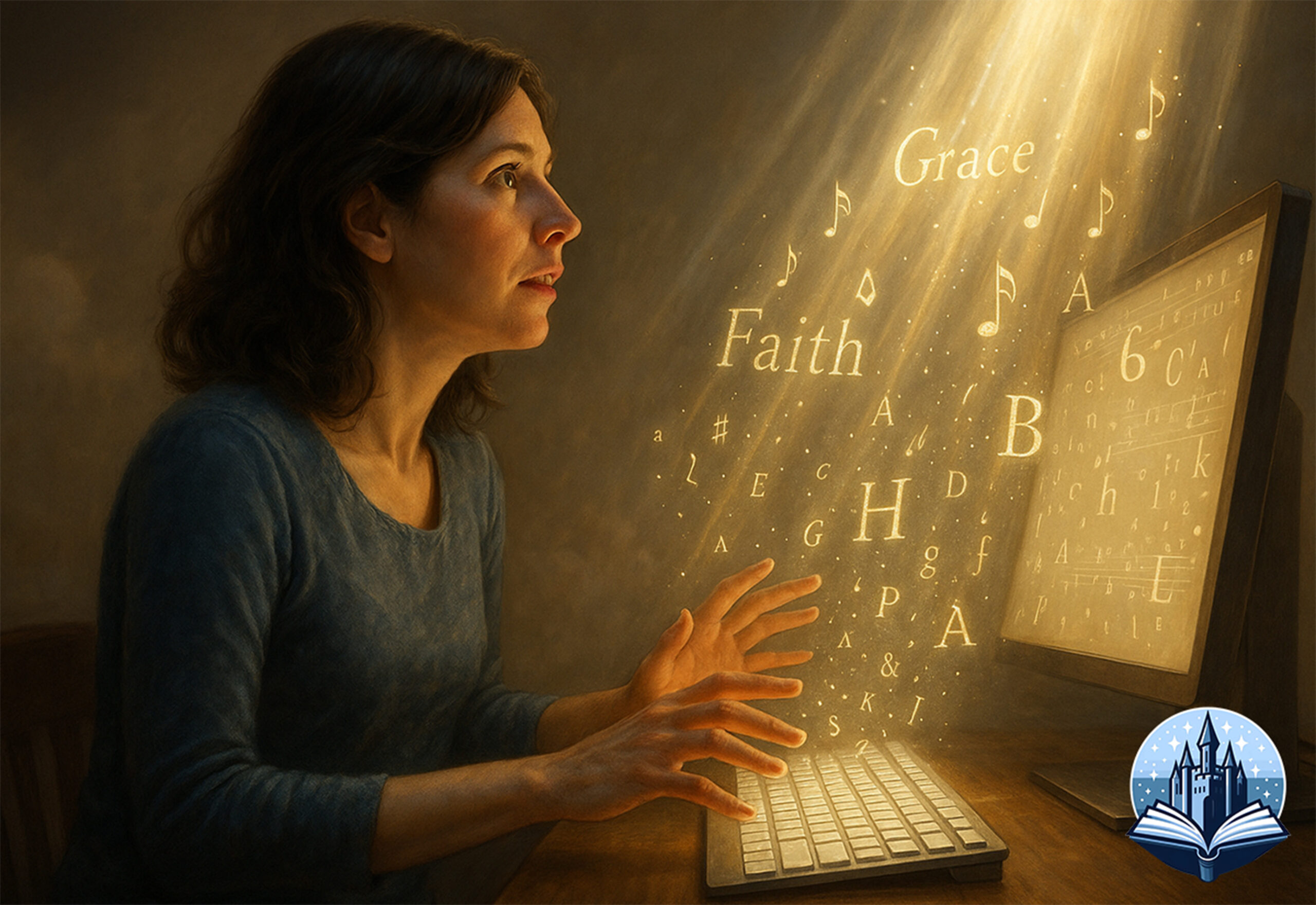
Imagine approaching writing like prayer. Before your fingers touch the keyboard, you whisper, Holy Spirit, breathe through these words. Suddenly, what you write stops being mere prose and becomes revelation. Writing under the Spirit’s influence also means restraint. Not every thought deserves to be said. Some sentences must be rewritten in humility or deleted in mercy. Wisdom isn’t just knowing what to say. It’s also knowing what not to say.
Like the disciples standing before the magistrates, we too are brought before the public court of readers, editors, and critics. Our defense is in authenticity, not eloquence. The Spirit gives us the words that matter most.
The Supercalifragilistic Calling
To live and write supercalifragilisticexpialidociously is to embrace the fullness of God’s character in creative expression. It means:
- Living super — above fear, cynicism, and self-pity. We set our minds on things above, not on earthly things (Colossians 3:2)
- Seeing cali — the beauty of grace at work in imperfection. Like a potter shaping clay, God makes beauty out of our brokenness.
- Accepting fragilistic — acknowledging our dependence. The more fragile we admit we are, the more his power flows through us.
- Trusting expi — living in the light of forgiveness. Guilt silences creativity, but grace unlocks it.
- Celebrating ali — daring to be different. God’s people are called peculiar (1 Peter 2:9)—holy in the best kind of way.
- Becoming docious — remaining teachable. The moment we stop learning, we stop growing. God delights in curious minds.
To write like this is to live like this—to let every project, poem, and paragraph become an altar of praise—to be supercalifragilisticexpialidocious.
Sacred Tools
Words can wound or heal, obscure or reveal, tear down or build up. The difference lies in who holds the pen. When God’s Spirit authors through us, we become co-creators in his ongoing masterpiece.
Each phrase that honors truth and grace joins the echo of his eternal “Let there be.” So let us write, speak, and live with this holy ambition—to be wordsmiths who reflect the Word himself. Let our sentences shimmer with meaning and melody until even angels might pause to listen.
And when our words fail, as they so often do, may our silence still speak of his wonder. Perhaps that’s when we finally grasp what supercalifragilisticexpialidocious really means: A joyful attempt to describe the indescribable God, whose beauty, gentleness, and glory overflow into every syllable of creation.
My friends, when I told you my story about God’s grace, I didn’t use fancy words or impressive philosophy that would make me popular, because all I wanted was for you to know Jesus, the Messiah, who died that you might live. — 1 Corinthians 2:1–2 The Discussion Bible
Precocious Words
It started one day when I felt quite atrocious,
My writing was messy, my grammar ferocious.
I needed a spark that was bold and ambitious,
A word so grand, something bright, and delicious.
I thought and I thought. My words were explosious,
When out popped a word that was highly composious.
It jingled and jangled. It rhymed with precocious.
Yes, it was “supercalifragilisticexpialidocious.”
Some say that word is absurd and pretentious,
Too long, too loud, and maybe too boisterous,
But I say it sings with a joy so contagious,
It tickles the tongue and stirs hearts outrageous.
So if you feel glum or just mildly contorcious,
If your poem’s flat or your prose is monstrocius.
Just shout this long word. It’s not preposterous.
It’s simply “supercalifragilisticexpialidocious.”
For super means more, and cali means fair,
Fragilistic means handle with gentle care.
Expi means pardon, ali means strange,
And docious means learning—a wonderful range.
So gather your words, the weak and the strong,
The short ones, the sharp ones, the ones that belong.
Then blend them with laughter, both deep and devotious,
And make them supercalifragilisticexpialidocious.
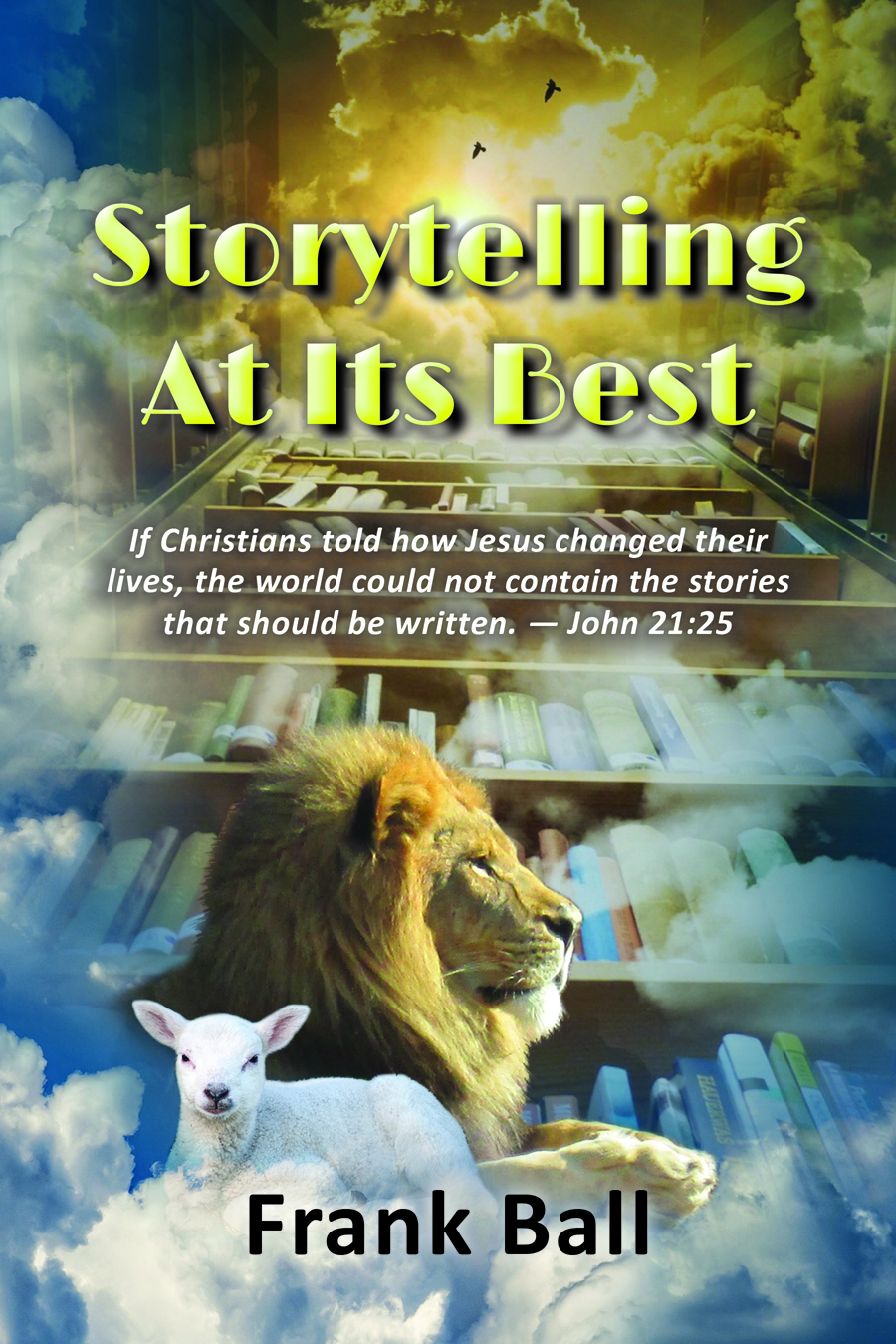
For a practical guide to storytelling, check out Storytelling at Its Best