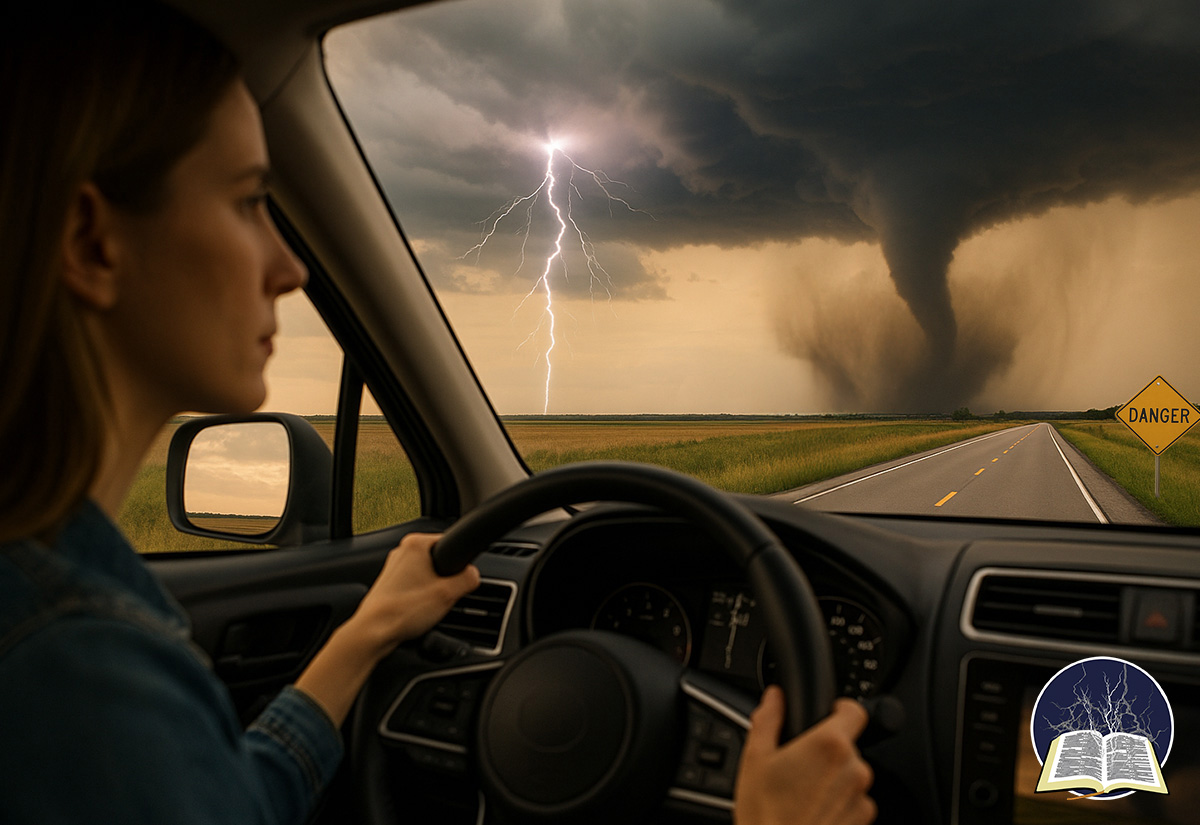
What makes “signs of the times” more difficult to interpret than weather?
Hypocrites! You can read the signs of the earth and sky to determine what the weather will be. How can you not see what is happening now? Why can’t you decide for yourselves what is right?
— Luke 12:56–57 The Discussion Bible
In our modern world, we are flooded with information. We check forecasts before picnics, analyze market trends before investments, and research reviews before buying. But do we give the same diligence to recognizing the signs of God’s hand at work? Spiritual blindness isn’t a lack of ability. It’s often a lack of willingness.
Truth Versus Comfort
When truth is uncomfortable, people often choose the lie because it offers immediate comfort. Think of a patient who refuses to get tested for a disease because they’re afraid of the diagnosis. The truth could lead to healing, but denial feels easier in the moment. Spiritually, many cling to familiar lies because accepting the truth feels like it would be a loss.
Jesus said knowing the truth will set us free (John 8:32). Yet freedom requires leaving behind chains, and some chains make us feel safe. Like Israel longing for Egypt even after being freed from slavery, people sometimes choose the bondage they know rather than the freedom they don’t understand.
Same Sign, Different Response
A single event can stir radically different reactions. The same sun that melts wax hardens clay. The same fire that refines gold consumes stubble. At the second coming of Jesus, some will rejoice while others will cower in terror (Revelation 1:7). Same sign. Opposite response.
In our daily lives, we see this. A sudden layoff may drive one person to despair but another person to renewed dependence on God. A sermon may inspire one listener to repent while leaving someone else unmoved. The heart of the person determines the outcome, not the sign itself.
Missing the Obvious
Jesus accused the Pharisees of choking on a gnat but swallowing a camel (Matthew 23:24). They were meticulous about small ritual details while overlooking massive issues of justice and mercy.
We can act the same way. A church might argue for hours about music style but ignore the hungry family down the street. A believer might notice every flaw in someone’s behavior while excusing their own pride or bitterness.
It’s like standing nose-to-nose with a molehill until it looks like a mountain, while ignoring the real mountain in the distance. True wisdom compares the two. The human heart has an amazing capacity to magnify what doesn’t matter and minimize what does.
Asking God to Open Our Eyes
The psalmist prayed for his eyes to be opened (Psalm 119:18) Without divine help, we remain spiritually nearsighted. Think of driving at night. Headlights illuminate the road, but without them, even a straight path becomes dangerous. God’s presence in us can serve as our spiritual headlights, enabling us to see what would otherwise be hidden.
When distractions cloud our vision, asking God for clarity is not only wise, but it’s also essential. Like blind Bartimaeus crying out, asking for his sight (Mark 10:47), we too must ask for eyes that see.
Physical, Emotional, and Spiritual Signs
Life gives us different categories of signs:
- Physical Signs: Pain warns us of injury. Fatigue signals overwork. Yet we often treat symptoms instead of addressing causes.
- Emotional Signs: Fear, anger, or discouragement can reveal misplaced priorities or hidden idols. Elijah’s despair in 1 Kings 19 showed not just exhaustion but also a crisis of perspective.
- Spiritual Signs: Conviction of sin, answered prayers, or opportunities to serve are nudges from God. The Pharisees dismissed Jesus’ miracles as demonic (Matthew 12:24), while the Magi saw a star and sought the new King (Matthew 2:1–2).
The difference is not in the sign but in the response. Some see God’s hand at work and worship him. Others explain away the same event.
False Signs and Misinterpretation
Not all signs are trustworthy. Jesus warned about false prophets who would perform “great signs and wonders to deceive” (Matthew 24:24). Spiritual discernment is crucial. Balaam’s story (Numbers 22) offers a vivid example. When God placed an angel in his path, Balaam’s donkey recognized the sign and refused to move. Instead of recognizing God’s warning, Balaam beat the donkey. Misinterpretation turned a divine warning into misplaced anger.
Today, many treat obstacles as nuisances instead of invitations to reflect and question whether we’re really doing what we should be doing. A closed door may not be rejection. It may be redirection. Misreading the signs can lead to frustration instead of obedience.
A Choice
Signs never force obedience. They invite response. Think of traffic laws. A stop sign doesn’t force anyone to stop. It simply warns of consequences if the sign is ignored. Spiritually, ignoring God’s signs doesn’t absolve us of responsibility. Like missing a speed-limit sign, pleading ignorance doesn’t erase the penalty.
Even small daily signs give us choices. An opportunity to help a struggling neighbor. A gentle conviction to pray. A Bible verse that suddenly feels personal. These are not accidents. They are signs that God is speaking, waiting to see how we will respond.
Open Eyes
The Magi noticed a star others ignored and traveled far to worship Jesus—the child who would be King. Their journey shows that signs require both awareness and action. Most people looked at the sky and saw nothing unusual. The wise men saw something worth following.
So the prayer becomes simple: “Lord, what am I missing?” That question opens our eyes to what God is already showing us. With his help, we avoid magnifying molehills, ignoring mountains, or following false lights.
Signs are everywhere—physical, emotional, and spiritual. They point us toward truth, but only for those who want to see, interpret, and surrender will find freedom.
Signs
We watch for the rain when the dark clouds appear,
But miss God whispering, “My presence is near.”
We check out the weather, the storm and the skies,
Yet skip over truths that are right before our eyes.
Some people love comfort. They don’t want to change.
They cling to their patterns, though heavy and strange.
The truth feels unsettling, too sharp and too free,
So they cover their eyes and say, “That’s not for me.”
We strain at the gnat and a camel we chew,
We fuss over little and miss what is true.
A speck in our neighbor looks bigger than tall,
But beams in our own eyes, we don’t see at all.
The Magi saw a star and they followed with care.
Balaam was angry at his donkey standing there.
The signs were around them, as plain as could be,
But one chose to listen, the other to flee.
False signs can trick us. Yes, they lead us astray,
Like wolves dressed as sheep hunting for prey.
Measure each wonder by Scripture’s true light,
For lies wear a costume that looks rather right.
Lift up your eyes when the signs come into view.
Don’t harden your heart. Let God’s Spirit renew.
The choice is before us—to either follow or stay,
To see or ignore what he would show us today.
So pray for God’s wisdom, for eyes that are clear,
To notice the signs when his message is near.
For writing and living, his truth is the key—
The signs point to Jesus, for all who will see.
For many more open-ended discussion questions for almost every verse in the Bible, check out The Discussion Bible