
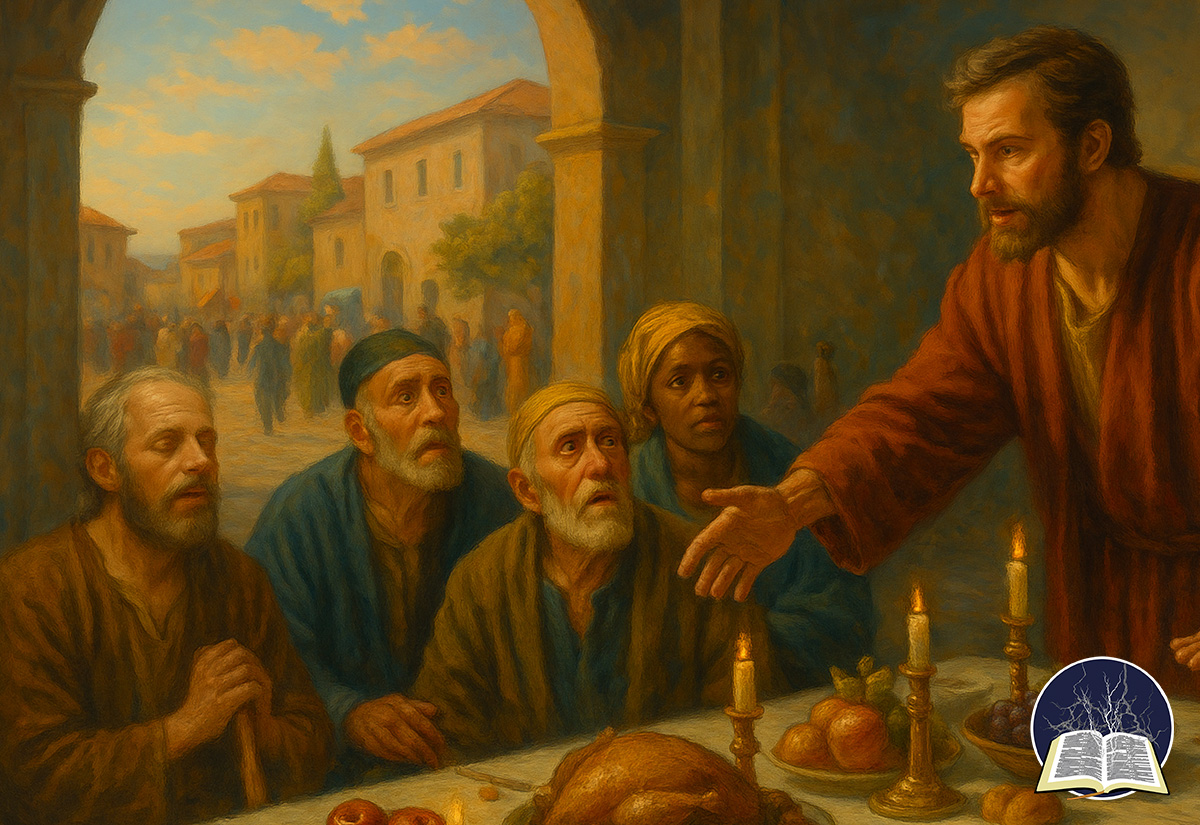
Why would people make excuses, not wanting to attend a banquet that Jesus was serving?
A man once planned a huge banquet,” Jesus said, “and invited many guests. … One after another, they made excuses. … The host was furious. ‘Quick,’ he told the servant. ‘Go into the city streets and alleys and bring in the poor, handicapped, lame, and blind. … None of those I first invited will get even a taste of my banquet.’” — Luke 14:16–24 The Discussion Bible
We’ve all received invitations. Some come on expensive cards with elegant printing. Others pop into our inbox with a simple YOU’RE INVITED. But no matter the format, an invitation matters only if we think it’s worth our time.
The Bible tells a story where people declined the Master’s invitation while others came. What was the difference?
Why Some People Say “No Thanks”
Invitations are often declined because people think they already have something better. That happens with God’s invitation too. Many people feel like their life is just fine without him, or they think they already have enough and don’t need more. Caught up in their routines, jobs, and social circles, they don’t stop to consider the value what’s being offered.
Jesus once said, “I have come to bring the fullness of life.” Why didn’t that excite everybody? Because saying, “I’ll give you life abundantly,” is meaningless to those who assume they already have it. As the apostle Paul once said: When unbelievers put their faith in something other than God, the truth is veiled. They can’t see the value of God’s invitation, because they’re stuck in a mindset that blocks them from seeing it clearly.
The Problem Isn’t the Invitation”
God’s invitation is the best anyone could receive. It’s an offer of forgiveness, purpose, and eternal life. The problem isn’t with what’s being offered. It’s with how the message is delivered, if it’s delivered at all. If we aren’t delivering the invitation, people can’t know there’s even a banquet to attend.
How Delivery Method Matters”
If you’ve ever ignored an invitation, it might have been because it didn’t seem relevant. Maybe it was poorly explained. Maybe the timing was bad. Maybe it just didn’t sound like it was for you. That’s why how we invite people to consider God’s offer is so important. It’s not about pressure or perfect words. It’s about speaking in ways people can actually hear.
The Apostle Paul said he had become all things to all people, with the hope that some might be saved. He understood that different people need different kinds of conversations. Some people need thoughtful answers to deep questions. Others need stories that connect with their life experiences. Some just need to see real kindness in action.
Real People, Real Invitations”
Jesus didn’t just broadcast a mass message. He spoke to people one-on-one. He met them where they were—whether that was by a well, in a fishing boat, or on the side of a road. He met a woman drawing water from a well and changed her life with a simple conversation. She was so excited about her encounter that she ran back to tell her whole village. That’s what a personal invitation can do.
When invitations are personal, they’re more powerful.
We Need Help”
The truth is, we need help to deliver God’s invitation well. We need wisdom to know what to say, when to say it, and how to really listen. James says, if we lack wisdom, we should ask God, because he gives generously without finding fault.
God is ready to help us communicate with care and creativity. It’s not about having all the answers. But it is about being available and willing to share what we know.
A Story That Connects”
In today’s world, many people are skeptical of religious words or formal preaching. What they trust are real stories, genuine compassion, and honest conversations. The best invitation might start with simple words like: This changed my life. I wonder if it could help you too.
God’s invitation isn’t limited to a select few. It’s open to everyone. The table is set. The door is open. But people need to know about it. Maybe you’ve already received that invitation. Maybe you’re still wondering if it’s for you. Either way, the offer is still on the table.
If you’re someone who shares the invitation, remember: it’s not about crafting the perfect pitch. It’s about caring enough to open your door and invite people in. If you’re someone who’s been invited but you aren’t sure what to do, maybe it’s time to reconsider.
The feast is waiting.
The Banquet Is Ready”
There’s a feast in the Kingdom, a banquet so grand,
With delights beyond dreams in a far better land.
But folks pass it by, with a shrug and a grin,
Not seeing the joy they are offered within.
They say, “I’m quite busy, I’ve work I must do.
I have other plans, and they don’t include you.”
So the Master says, “Go. Find the lost and the lame.
Invite those forgotten, to come just the same.”
Some people feel rich and need nothing at all.
They can’t see their hunger or hear Heaven’s call.
But the poor and the broken, the ones pushed aside,
Will jump at the chance to sit by Jesus’ side.
An invitation’s no treasure if it’s cast on the floor,
If it’s tossed in a pile or ignored at the door.
It must reach the heart. It must speak to the soul—
To show them God’s love, his goodness, his goal.
The problem’s not God. His offer is right.
But sometimes the message is lost in the night.
We fumble and stumble and muffle our voice,
Forgetting that sharing is more than a choice.
We must tell the story with care and with art,
With words that will open a skeptic’s heart—
Not fancy, not forced, but simple and right.
Life shines so much brighter when God is in sight.
A letter unopened, a word left unsaid,
Leaves hearts in darkness when light should be spread.
How will people know of this beautiful grace,
If no one will go, if no one enters their space?
So go to the highways, the streets, and the squares.
Delivering the message that Jesus really cares:
The feast is still waiting. The door’s open wide.
There’s plenty of room at the table inside.
God’s wisdom will guide us. His Spirit will lead,
To find the right words to speak to every need.
His invitation is perfect. His welcome is true.
The question remains: Will he send me? Or you?
For many more open-ended discussion questions for almost every verse in the Bible, check out The Discussion Bible