
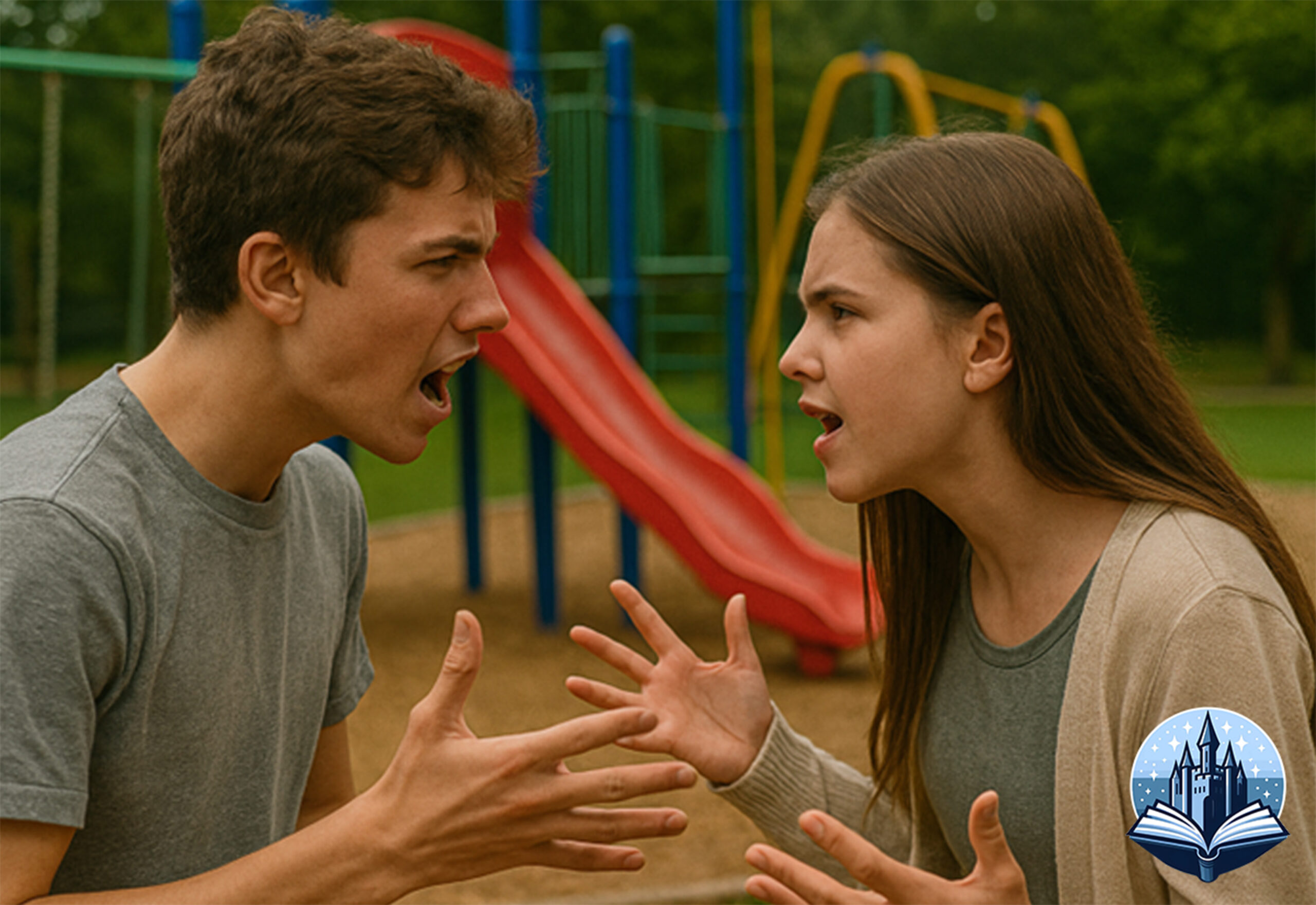
The best dialogue illuminates and draws into focus some important aspect of character or plot. — William Bernhardt
We often think of dialogue as conversation—words spoken aloud, ping-ponged between characters. But the best dialogue doesn’t just fill space or sound realistic. It reveals. It sharpens. It strips back layers. It puts characters into clearer focus, often more powerfully than any paragraph of narration ever could.
More Than Words: What Dialogue Really Does
Good dialogue isn’t just talk. It’s action disguised as conversation. It exposes motivation:
- “Why didn’t you come home last night?” isn’t just a question—it’s a test of loyalty.
- “I guess you did what you had to do” might mask heartbreak with resignation.
Every word chosen—or omitted—reveals something.
The Power of What’s Not Said
One of the most underrated tools in dialogue is subtext—what’s happening beneath the surface. Great writers know how to infuse a scene with unspoken tension. A pause. A shrug. A line trailing off into ambiguity. These silences can be louder than an argument.
Imagine a scene where a soldier returns from war. His spouse opens the door, sees him, and simply says, “You’re home.” No hug. No explosion of emotion. Just the echo of years lost and love strained packed into three words. The emotional power of the scene isn’t in elaborate dialogue. It’s in what’s felt between the words.
Why Less Can Mean More
Minimal dialogue forces readers to lean in. It invites participation. The reader becomes a partner in decoding what the characters are feeling, thinking, and hiding. In doing so, the connection deepens.
Think of Hemingway’s famous “iceberg theory,” which says only a fraction of meaning is on the surface. The rest is submerged, waiting to be discovered by the reader, not told or explained by the author.
Let Silence Do the Talking
Next time you’re writing a pivotal scene, try this: Write the dialogue. Then strip out 25 percent of the dialogue, replaced with gestures, facial expressions, or silence. See what remains. Chances are, what’s left will carry more emotional weight.
Think about moments from books or movies where a look, a pause, or a single understated sentence carried the entire weight of the moment. How can you incorporate that subtlety into your writing?
Silence can take your storytelling to the next level. Remember: it’s not just what your characters say. It’s what they mean … and sometimes, what they choose not to say.
For a practical guide to storytelling, check out Storytelling at Its Best